
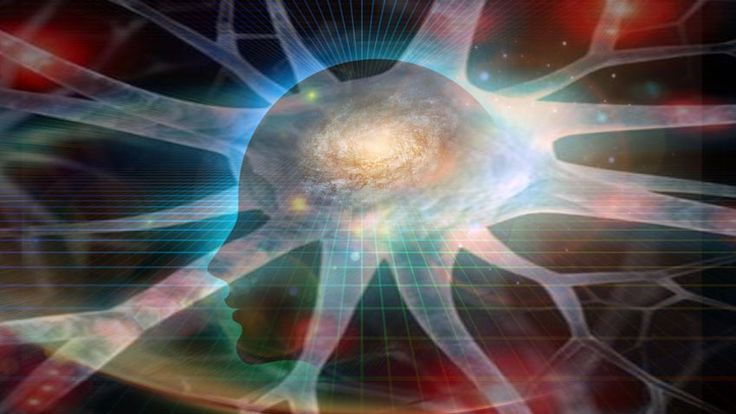
Intro to Consciousness
In the last few years, the term “consciousness” seems to have grown in popularity for use during casual conversation. I’d dare to assume that the majority of adults understand what the word means. I wonder, however, how aware society is of their own consciousness and its complexity, especially of its many layers.
Being a topic that is heavily debated, having no clear-cut evidence of its location, consciousness still remains somewhat of a mystery. In its simplest form, consciousness is defined as the state of being aware and able to think and perceive one’s surroundings. However, when delving deeper into the concept, it becomes much more abstract.
The interpretation of consciousness extends to spiritual, philosophical, and scientific realms. Some believe that consciousness transcends the physical body and is interconnected with the universe or a higher power. Others argue that consciousness is an illusion we create with our brains and is not a separate entity. These differing beliefs highlight the complexity of the concept and the various ways we understand it.
Consciousness in Science
In the realm of science, one of the most mysterious topics that researchers have been grappling with for centuries is the concept of consciousness. Defined as the state or quality of being aware of something within oneself and animating it with life, many consider consciousness to be the essence of human existence and the foundation of our subjective experiences.
Neuroscience and the Materialist View
The question of what exactly consciousness is and how it relates to the physical processes of the brain is one of the most challenging and fascinating areas of research in the fields of neuroscience and psychology. For neuroscientists, consciousness is a product of the brain. They frequently study the brain to understand how it generates consciousness and what mechanisms are at play.
Not fully understood, there are various theories that attempt to explain consciousness. One of the more prevailing theories in mainstream science is that the brain generates consciousness. This perspective, known as the materialist view, asserts that all aspects of what we perceive, including thoughts, emotions, and self-awareness, are solely the result of neural activity in the brain.
Other theories scientists discuss are called the integrated information theory and the global workspace theory. They posit that consciousness arises from the complex interactions of neurons in the brain, which is crucial for our everyday experiences and behaviors. Yet, they are still only theories.
Quantum Physics and the Non-Materialist View
In recent years, there has been a growing body of evidence suggesting that consciousness is perhaps not simply a byproduct of brain activity, but is instead a separate entity that exists somewhat independently of the physical brain. Modern research in the field of quantum physics has begun to challenge this long-standing assumption of the brain and consciousness being synonymous.
Furthermore, recent advancements in quantum physics have provided additional support for the non-materialist view of consciousness. Quantum theory posits that reality is not as objective and deterministic as classical physics suggests, with the observer playing a central role in shaping the outcome of a quantum event. Some scientists argue that consciousness itself is a fundamental aspect of quantum reality, which influences and shapes the physical world in ways we don’t yet fully understand.
According to leading scientists, including renowned figures such as Sir Roger Penrose, a physicist, and Sir John Eccles, a neurophysiologist, consciousness may not be solely a product of the brain. Instead, they believe it is rather a separate entity that exists independently of the physical body. This perspective, known as the non-materialist view, suggests that consciousness may be a fundamental aspect of the universe, existing in a realm beyond the constraints of space and time.
in Philosophy
Moreover, the concept of consciousness as a separate entity from the brain finds support in the works of philosophers like David Chalmers, who famously introduced the concept of the “hard problem of consciousness.” Chalmers argument is that there is something fundamentally irreducible about consciousness that cannot be explained solely by brain processes, pointing towards the existence of a separate realm of consciousness.
and Death
One of the key arguments in favor of the non-materialist view of consciousness is the phenomenon of near-death experiences. “NDEs” are commonly reported by individuals who have been clinically dead or have been “near death.” These events often involves a sense of leaving the physical body, encountering a bright light or presence, and/or feeling a profound sense of peace and interconnectedness. These encounters are subjective, requiring us to analyze from different angles.
Near-Death Experiences
It’s important to note that although some argue that near-death experiences help to explain the state of consciousness as being outside the brain and body, there are some things to consider:
- Research has led modern science to understanding that the human brain is capable of neural activity even after the heart has stopped.
- Currently, what qualifies as death is when a heart is simply no longer beating.
- With blood and oxygen still left in the brain after death, brain activity is still possible for a short amount of time.
- Although there are several theories, how long the brain remains active after death is uncertain. This may differ between circumstances and individuals, while the average is anywhere from seconds to a few minutes.
- Some describe these experiences as perceiving them from outside their physical body, as if it is separate.
- Such events are comparable to our dream state. While dreams regularly feel real, we know that they happen as a result of brain activity during sleep.
- Interestingly, however, many out-of-body experience-rs have described what happened within the environment where their dead or nearly dead body rested. Many times, these stories were confirmed by family, friends, and/or medical staff, who reported the same set of events in which they were part of.
- Although confirmations aren’t the same as tangible evidence, nor are theories the same as facts. I’m making this point because even today, no one is certain where consciousness resides. It remains a theory that it is solely in the brain.
Carl Jung’s Layers
Carl Jung, a Swiss psychoanalyst and analytical psychologist from the early twentieth century, defined consciousness as the part of the mind that contains everything a person is aware of at any given moment. He believed that consciousness derived from the mind; which he believed to be something that existed both within and outside the human brain.
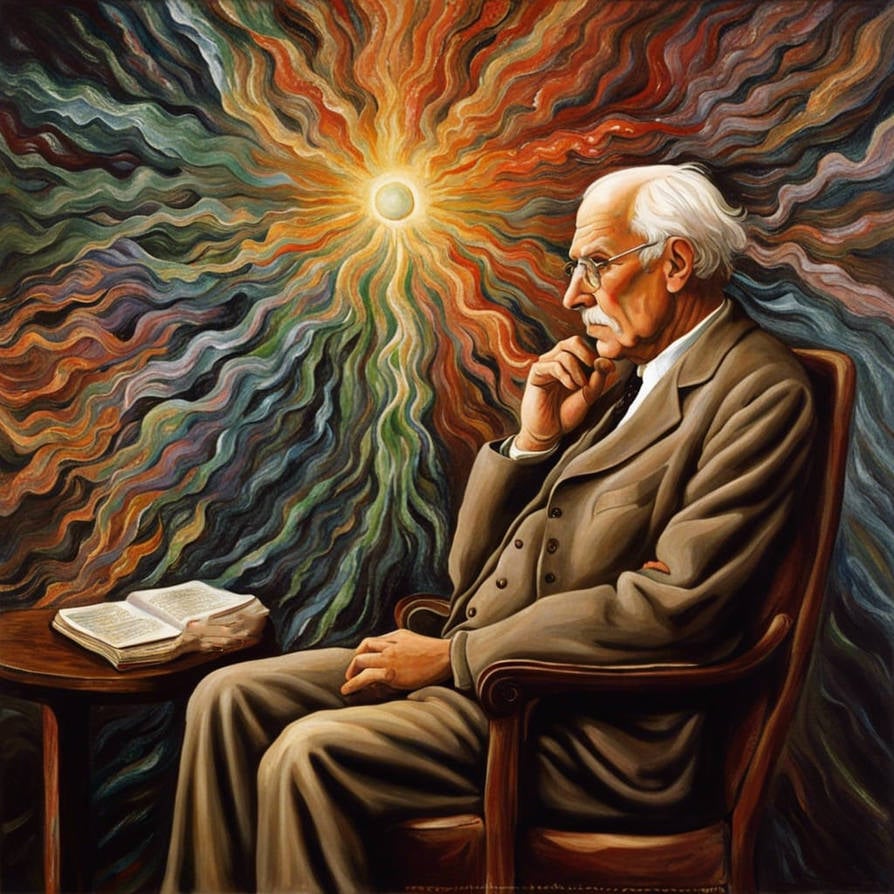
Jung explained consciousness as not being limited to our thoughts and perceptions, but also including our memories, emotions, and desires. He saw consciousness as the container of our ego, self-identification, and the tool for interacting with the world.
Creating a system of proposed layers of consciousness, Jung gave rise to the idea of consciousness as being multi-faceted and deeply complex. Beyond the layer of consciousness, he also believed in what he called the unconscious layer and a collective unconsciousness.
The Layers
If you’d like to learn more about the layers of consciousness, subscribe to this site below to receive email notifications whenever we post something new. In the meantime, you may want to check out a previous post where we examine the layers of consciousness. Here, we look at how Carl Jung shifted our view on psychology almost a hundred years ago due to his ideas and influence.
References:
- Baars, B. J. (1988). A Cognitive Theory of Consciousness. Cambridge University Press.
- Hameroff, S., & Penrose, R. (2014). Consciousness in the universe: A review of the ‘Orch OR’ theory. Physics of Life Reviews, 11(1), 39-78.
- Jung, C.G. (1971). Psychological interpretation of nature and the psyche. Yale University Press.
- Koch, C. (2012). Consciousness: Confessions of a Romantic Reductionist. The MIT Press.
- Shamdasani, S. (2012). Jung and the making of modern psychology: The dream of a science. Cambridge University Press.
- Tegmark, M. (2014). Consciousness as a state of matter. Chaos, Solitons & Fractals, 76, 238-270.
- Tononi, G. (2008). Consciousness as Integrated Information: A Provisional Manifesto. Biological Bulletin, 215(3), 216-242.
- “The Conscious Mind: In Search of a Fundamental Theory” by David Chalmers
- “The Self and Its Brain: An Argument for Interactionism” by Sir John Eccles
- “The Emperor’s New Mind: Concerning Computers, Minds, and the Laws of Physics” by Roger Penrose
Leave a Reply
You must be logged in to post a comment.