

Palmistry Overview
Palmistry, also known as chiromancy, is an ancient practice that interprets the lines, shapes, and patterns found on an individual’s palms to discern insights about their personality and life events. The most popular study of palmistry regards the lines of the palm. Each line, like the head line, represents a different aspect of a person’s life, such as their emotionality, rationality, major life events, and destiny.
The Head Line
There are three to four major lines on the palm. One of the most significant lines is the head line. It’s one that is almost always analyzed during a palm reading as it reveals a key component that makes up a person’s life and personality.
The head line is thought to contain essential information regarding an individual’s thought processes, ability to learn new information, and reason. Likewise, it often indicates thought over emotion, logic, and perception. Depending on what it looks like can tell palm readers about how the person uses their brain.
Where Is the Head Line Located on the Palm?
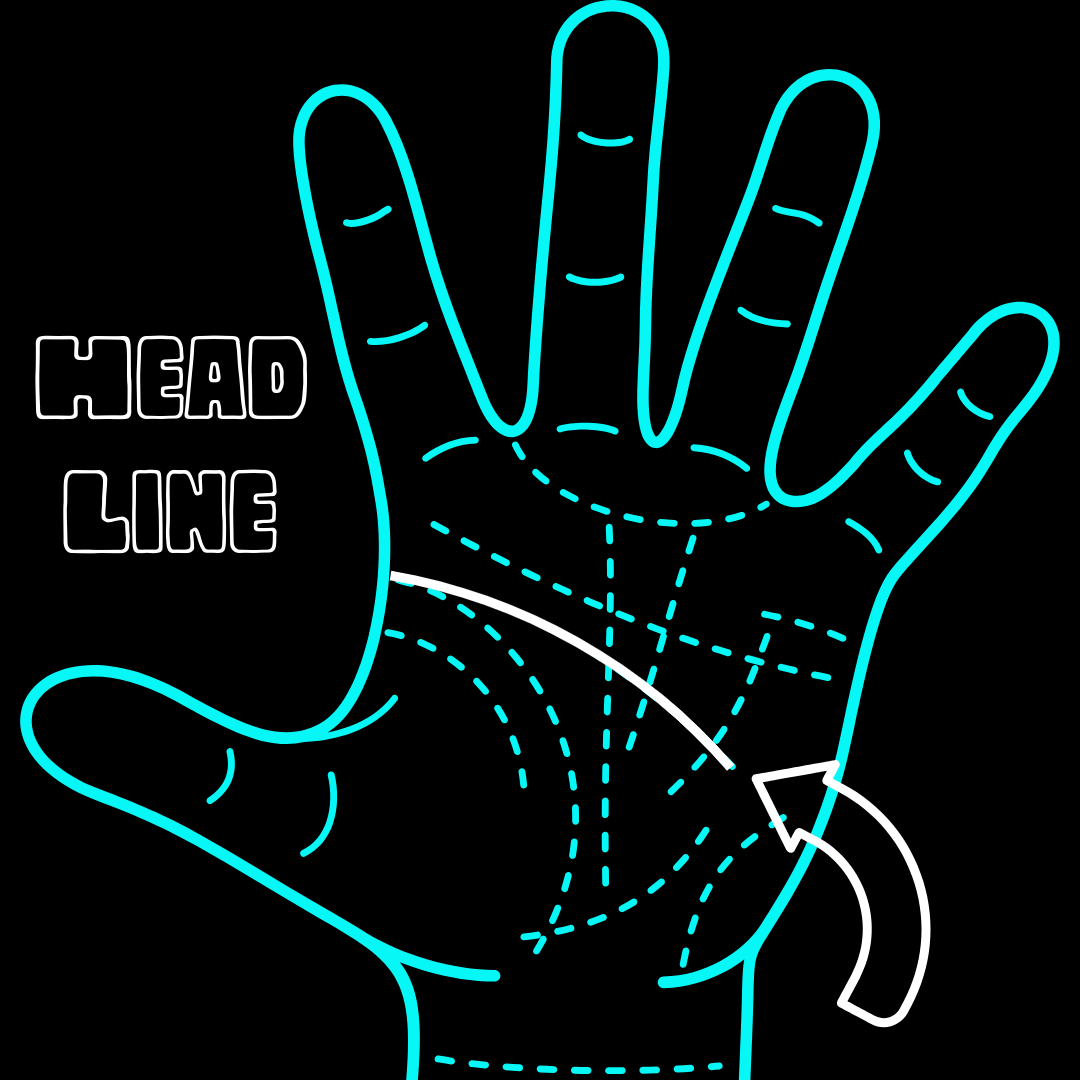
To find the head line, look at either one of your palms. Focus your attention toward the edge, in the space between your index finder and your thumb. If you know where your heart line or life line is located, you’ll likely find your head line between the two of them.
Of course, not everyone has the same location or type of head line. However, it’s common to see a head line that is also attached to the life line. Either way, it’s likely that yours will begin at the edge of the palm and work its way down and toward the center or reaching across your palm.
Different Types of Head Lines
Taking on many forms, the head line can appear vastly unique from one person to the next. Each one provides distinct insights about an individual’s logic and thinking. Some things we want to look out for when studying the head line is the length, the depth, amount of clarity, location, and its position.
Common Misconceptions About the Head Line
Engaging with palmistry often gives rise to several misconceptions about the head line and its implications. A couple of these are that:
- A short head line means you’re stupid: A short head line has nothing to do with a person’s level of intelligence. It may actually indicate simple thinking or being more practical than intellectual.
- A long head line means you’re a genius: While having a super long head line can sometimes point to a person that is rather intelligent, it doesn’t necessarily mean they’re a genius. In fact, it may actually regard a tendency to overthink and overanalyze.
Head Line Examples
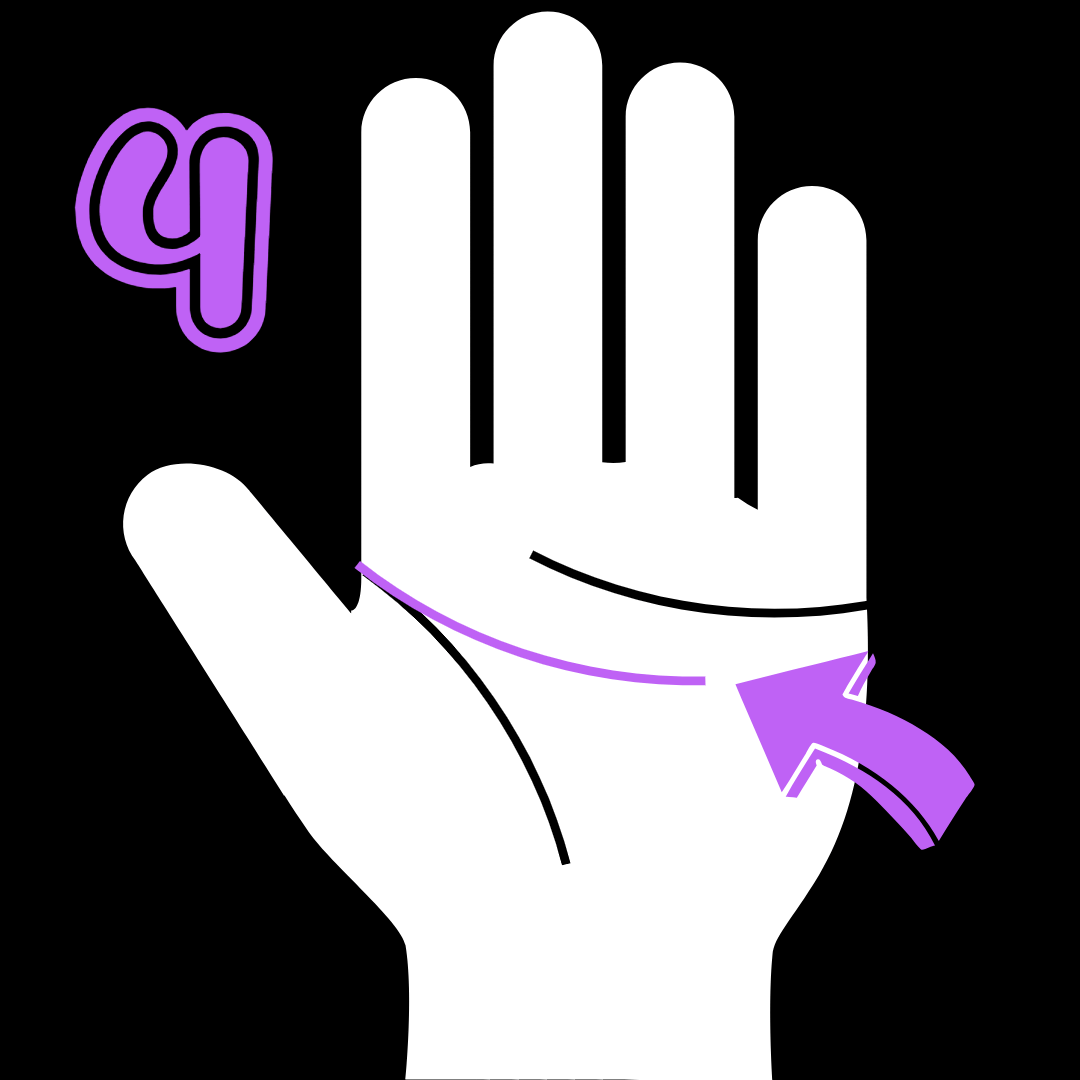
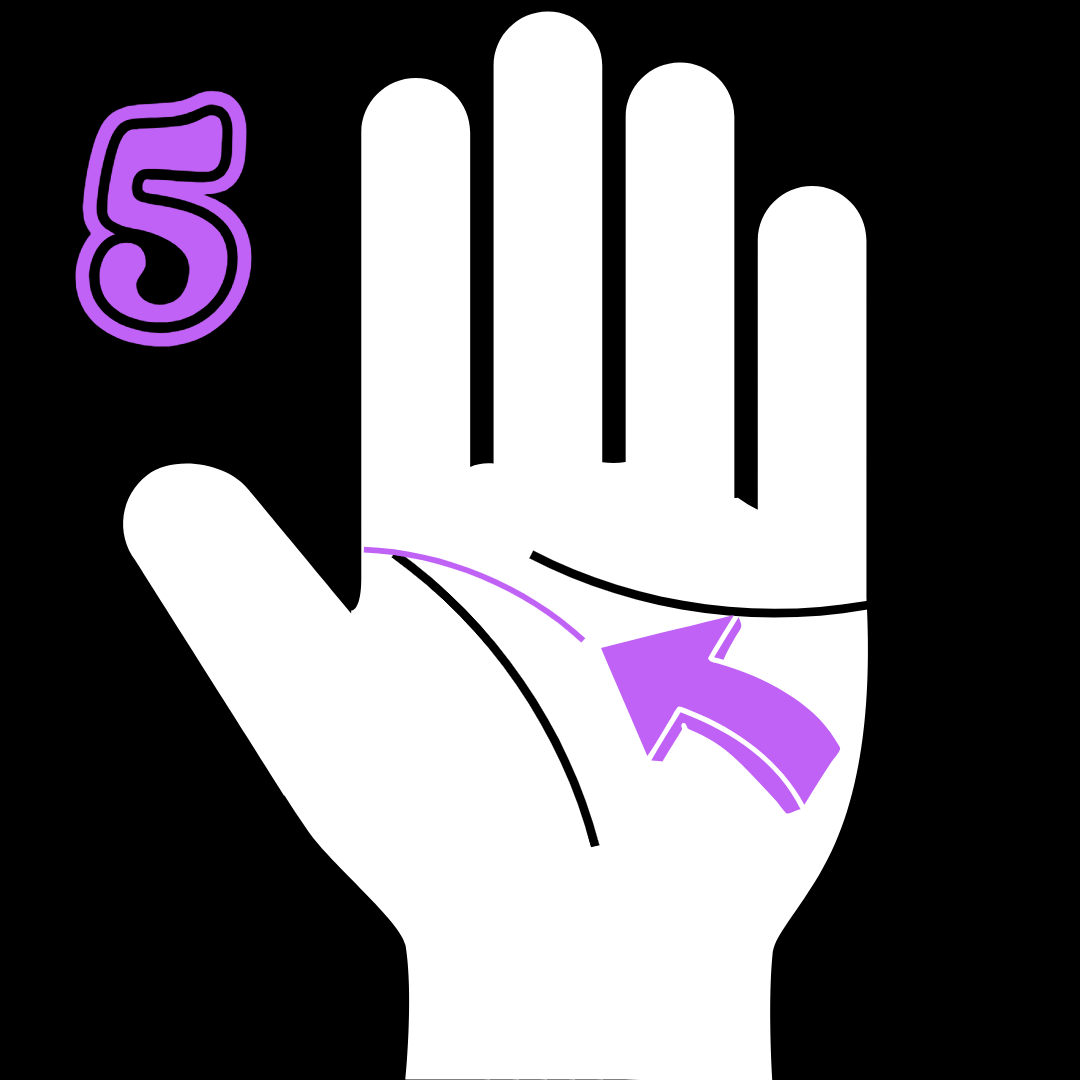
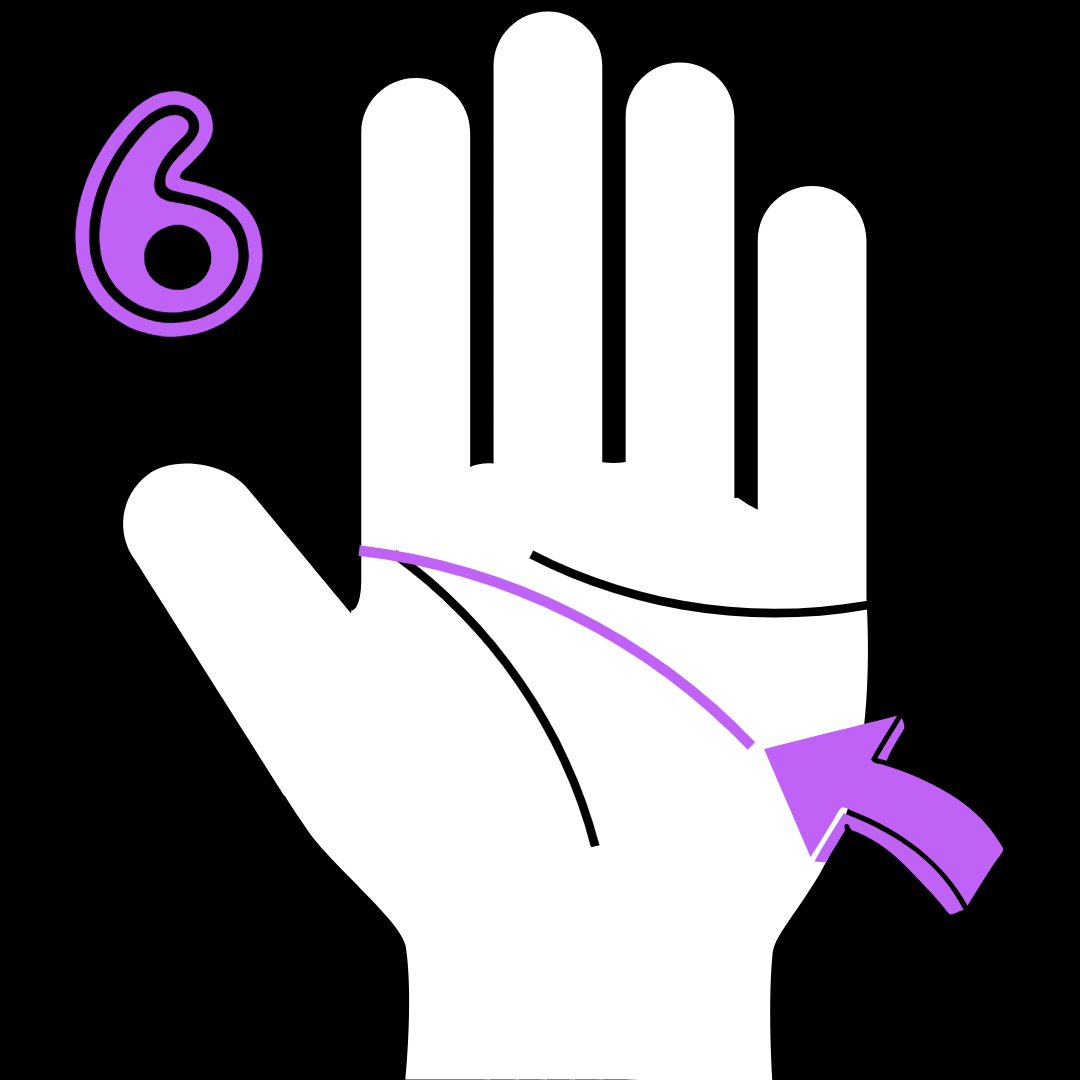
Below, we’ll reveal a few of the most common types of head lines. Scroll through the slideshow to see if one is similar to yours. Then, read the text underneath that matches the number on the photo.
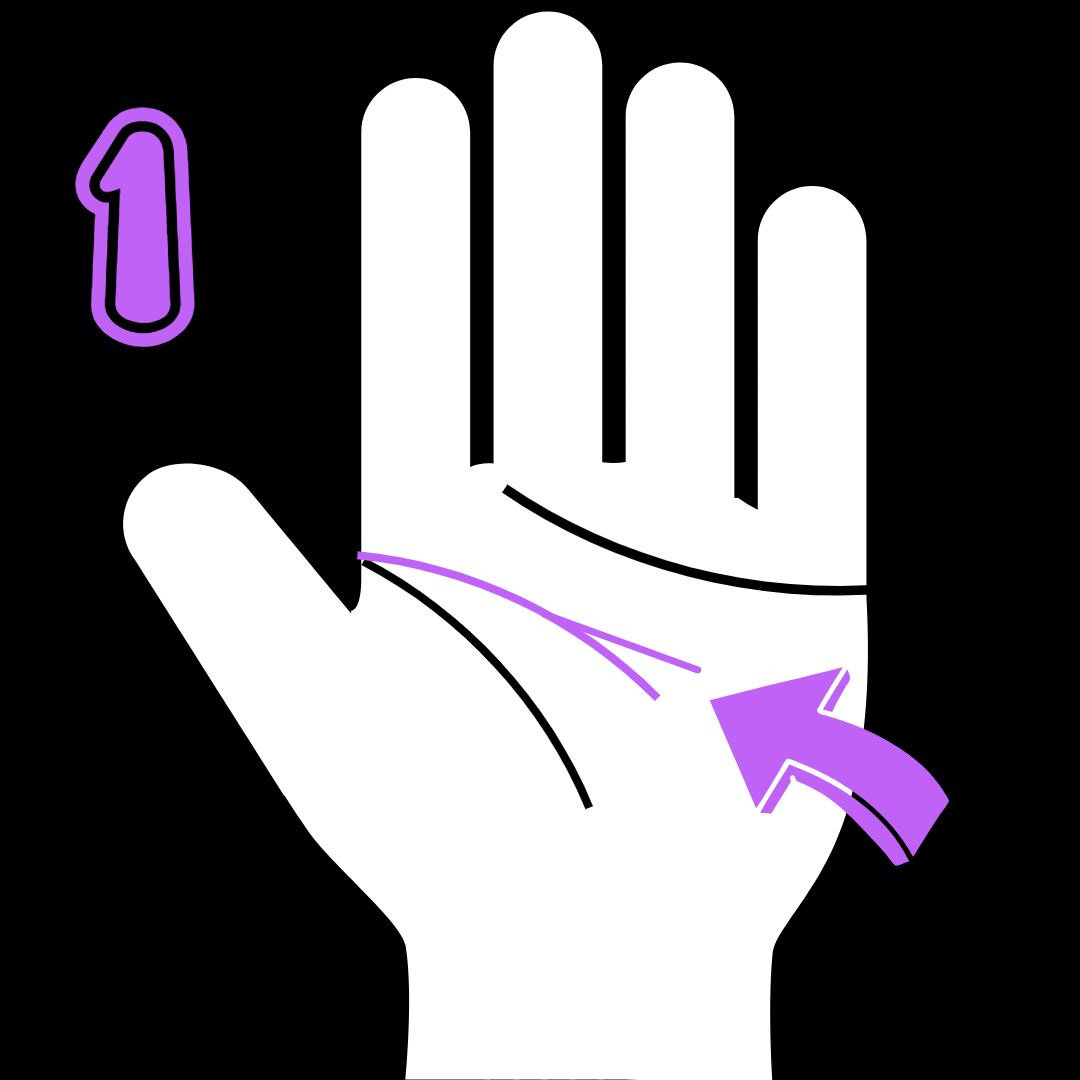
Forked Head Line (1)
Having a forked head line is usually represented by a multifaceted person with varied interests and ways of thinking. Their ability to reason is adaptable, depending on the circumstances of life, at any given moment. They’re often creative and innovative. On the downside, it is typically also an indication of indecisiveness, having conflicting point of views, and being malleable within their direction in life, easily swayed by the opinions of others.
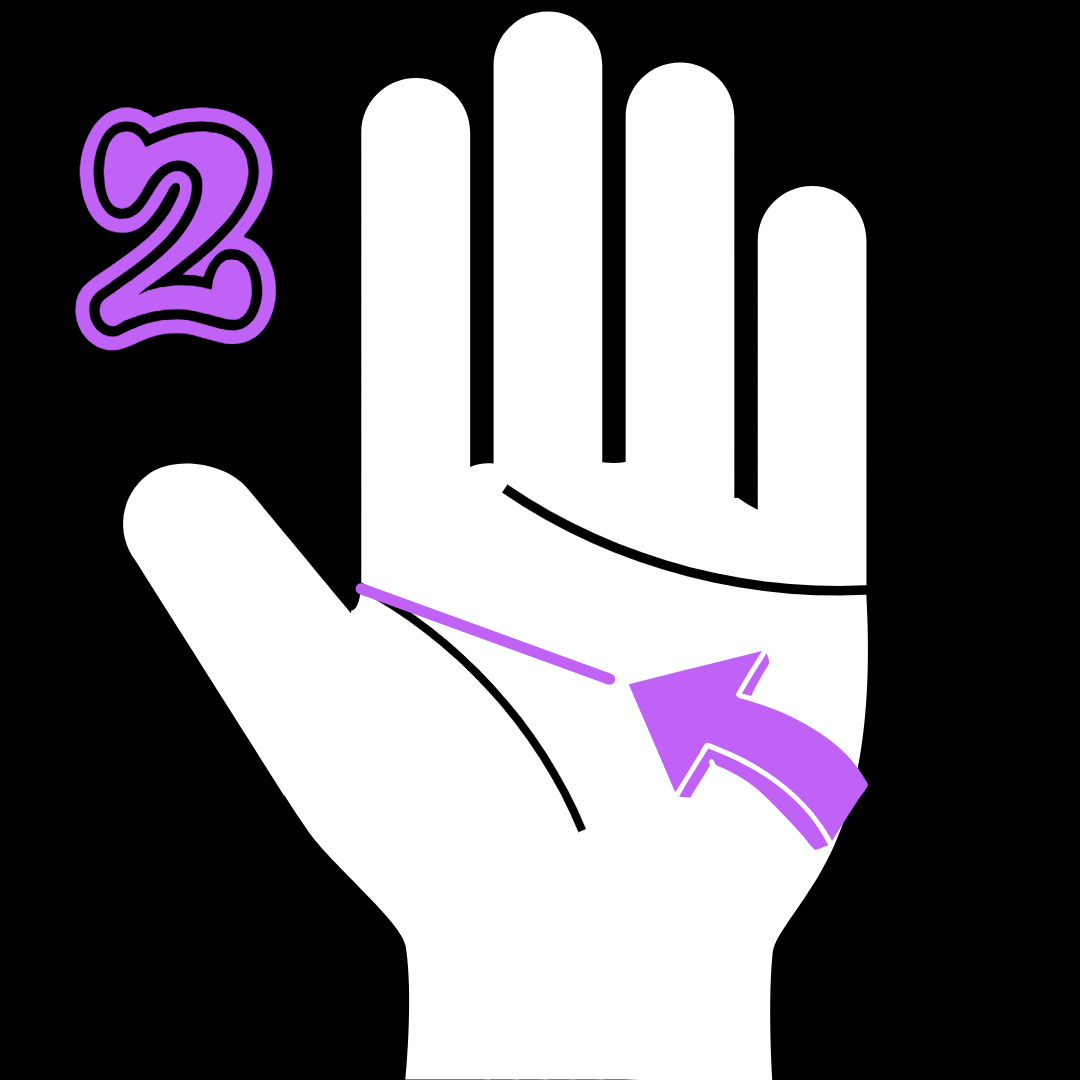
Straight Head Line Ending in Center of Palm (2)
Usually, whenever a person has a head line that is slightly short, but not too short, it ends at the center of the palm. However, when it’s also quite straight, it isn’t surprising to learn that it denotes a person who is straightforward. Meanwhile, it also means that the person is practical, stable, decisive, focused, and they don’t spend valuable time overthinking. This is because the center of the palm is surrounded and connected to almost all other areas, giving them a realistic approach to thinking.
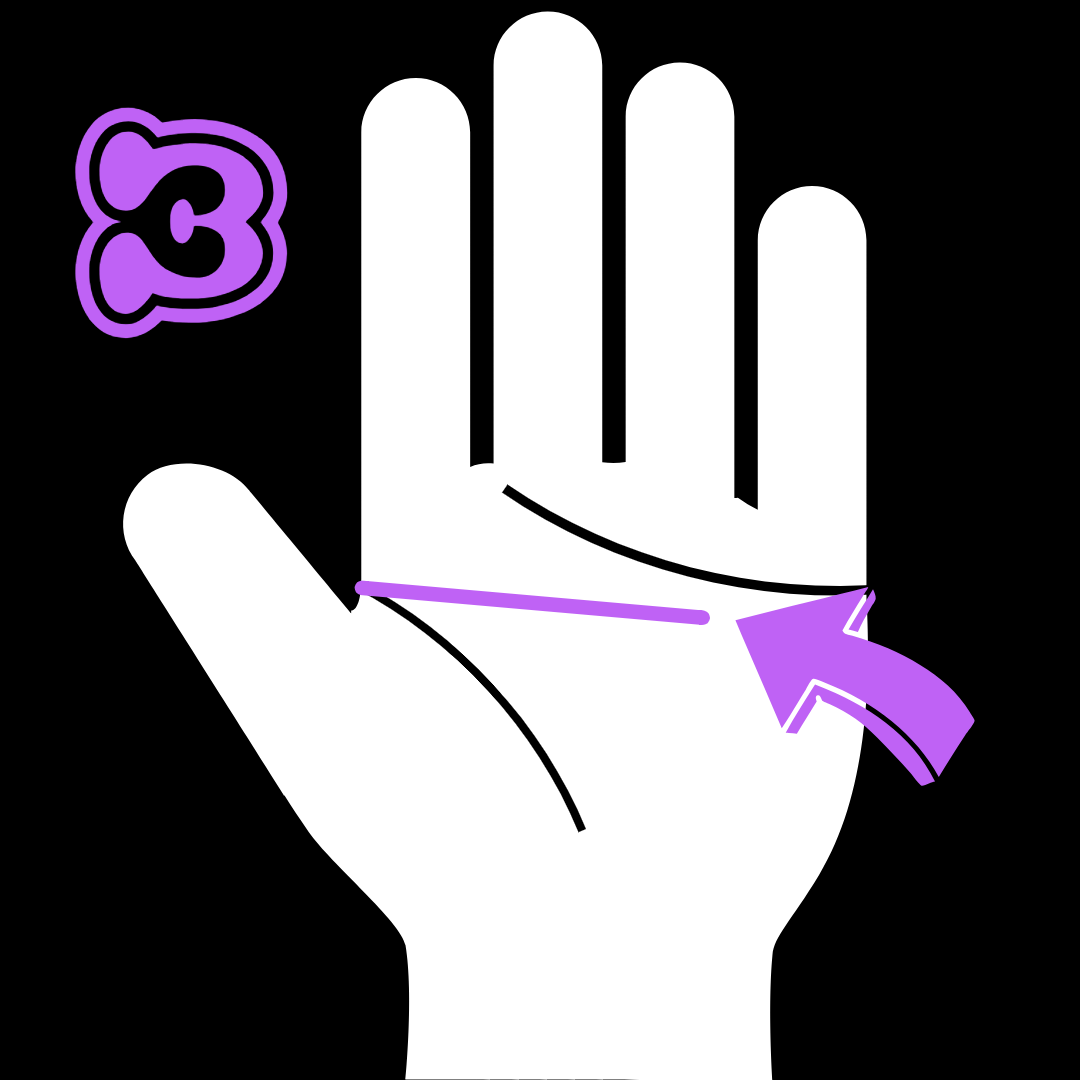
Long and Straight Across (3)
If a person’s head line is straight and moves into the mount of the moon, it frequently regards an individual who mixes intuition with logic. This type of person has a keen perception of other people and their environment. Not to mention, they’re able to sense the thoughts of others and can read body language and other social cues with ease. However, this line is usually crossed by other lines of the palm, specifically the life line or the fate line. As such, this can give the head line a slightly different interpretation.
Curves Upward (4)
Whenever an individual’s head line curves upward toward the heart line, it means that they’re quite reliant on their emotional intelligence. They may think rather philosophically, have a vivid imagination, and exert extreme open-mindedness. Depending on the state of their emotions at any given time, they may come off as heavily pessimistic or highly optimistic, which influences their ability to think rationally. As a result, they may turn to meditation or spirituality to find a balance of thought and emotion.
Downward Sloping and Short (5)
When the head line is short or faint and slopes downward, the person generally lacks the ability to focus for a long time. Likewise, they’re easily distracted and may struggle to understand theoretical concepts or abstract ideas. While they have a tendency to be introverted, they’re also realistic, reserved, and quiet. They don’t appreciate when other people make a fuss over small things and prefer the simplicity of life.
Downward Sloping and Long Reaching (6)
If a person has a downward sloping, long, and deep head line, they are strong in reasoning, problem-solving, focus, and attention. However, they have a depth of thought and may get lost within their head during their downtime. They enjoy exploring new information, reading, and doing extensive research on things they enjoy learning. Likewise, they maintain their ability to learn all throughout their lives and are less likely to get diseases of the brain, like dementia.
Leave a Reply
You must be logged in to post a comment.