

Overview
In previous posts, we’ve talked about the many layers of consciousness; including the conscious layer, the unconscious layer, and the collective unconscious. However, each of these layers can be further divided into sublayers. In this post, we’re going to dive into the sublayers of the conscious mind and analyze the “persona” as well as the “ego”.
The Conscious Layer
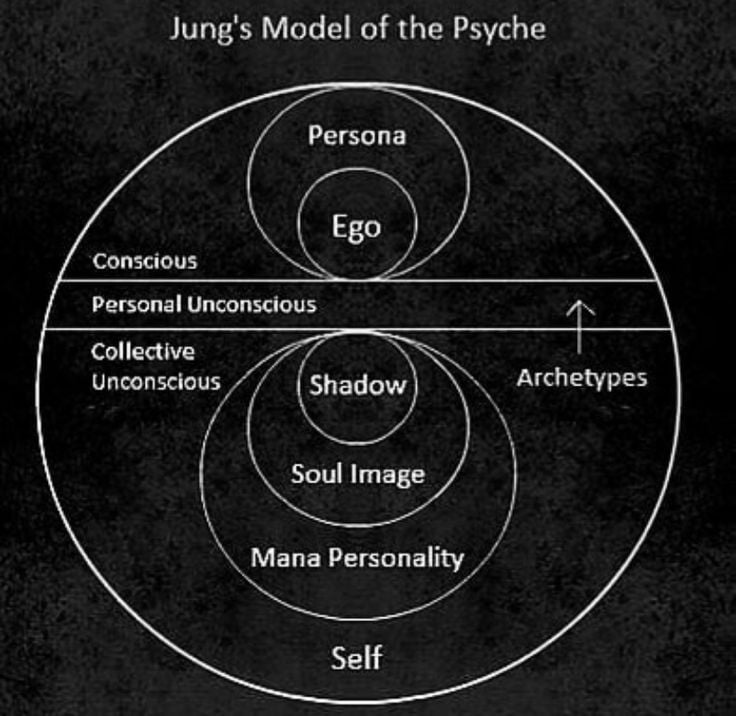
If we think of consciousness and its layers as an onion, the outermost layer of the onion is the conscious layer. Once we remove a few of the outer layers of the onion, we make our way to the unconscious layer. Next, more toward the center of the onion, we have the collective unconscious layer.
The further into the onion, the harder to see and recognize from the outside. However, it’s also more potent. Yet, when you look at an onion before opening it, we simply see the outermost layer, like consciousness. To know anything past the surface is to go beyond the most obvious layer and into the depth of it.
Meanwhile, each of those layers serve an important purpose of the onion. Obviously, the outer layer of it is for protection, keeping the softer and juicer layers safe. This is precisely the point of our conscious layer of our minds, including its sublayers known as the persona and the ego.
The Sublayers of the Conscious Mind
In case you don’t recall, the conscious layer of our minds is the same as our immediate awareness. It’s our inner dialogue, thoughts, perception, judgments, and our most obvious and current emotional states. Yet, this layer of our psyche can be broken down into further categories.
When viewing Carl Jung’s model of the psyche, we see on the top portion and above the first line the conscious layer. Inside the conscious layer there are two smaller circles. These circles represent the persona as well as the ego, which is even smaller.
What is the Persona?
Jung explained the persona as a mask we wear to navigate our lives. While our conscious layer is who we think, feel, and believe we are, we form our social identify through our persona. Although it isn’t who we truly are, it’s who we’re comfortable being in front of others.
This is the part of us that we represent as ourselves to the rest of the world. The persona helps us fit in, making it easier to connect with others. It allows us to adapt to different situations, helping us to meet social norms and expectations smoothly.
“One could say, with a little exaggeration, that the persona is that which in reality one is not, but which oneself as well as others think one is.”
—Carl Gustav Jung
The Mask
Of course, the persona is crucial for social interactions, but it can also be a double-edged sword. If we become too attached to our personas, we might lose touch with our authenticity. In short, living through the identity of our persona for too long poses the risk of alienation from our true selves.
After wearing a mask for hours, our face becomes sweaty, itchy, and irritated. Once we take it off, we see that our skin has temporarily taken the shape of the mask. We could handle wearing it for a while, but forcing ourselves to do it for too long may cause extreme discomfort.
The Functions of the Persona
Now, the persona has a purpose, with a set of tasks or functions in which it operates. Some of these are:
The persona enables us to adjust our behavior in various social contexts, making it easier to navigate the complexities of relationships. We may do this to fulfill other people’s expectations of us as we may not like we’re letting them down or feeling that they’re forming negative feelings about us.
By putting on a mask, we can protect ourselves emotionally. It shields us from exposing our vulnerabilities to the world, which can be crucial in maintaining a sense of safety and security. Oftentimes, we have this deeply rooted fear that if we’re truly being ourselves, we won’t be accepted by others.
The persona allows us to curate how others perceive us. This can be particularly important in professional settings where first impressions can play a pivotal role in career advancement. Therefore, our sense of judgements based on our perception of other people’s judgments help us to form our persona.
The persona can be a social lubricant, allowing for smoother interactions with others. We often select traits that we think others will respond positively to, helping us create connections. With that being said, this is the part of us that is created, exaggerated, or acted, while many of us are completely unaware we’re doing it.
What About the Ego?
Egomaniac, egocentric, egotistical, and fragile ego are just a few terms that we’ve likely all heard in reference to one’s ego. Oddly enough, the term “ego” seems to have gained much more popularity than “persona.” Why is that if the ego is smaller and more protected than the persona?
The outermost layer of our onion, which is the part we don’t eat, is the persona. While the next layer is less dry, it’s difficult to cut through, which represents our ego. If the persona is the mask, the ego is the face behind that mask. These two parts are the ones comprising the conscious parts of our identity.
Fragile Ego
As we’ve just learned, the persona serves as a mask, but the purpose for this mask is for protection of the ego. Why would the ego need protection, you may wonder? Simply put, because it’s fragile.
Still, nothing within our conscious layer is who we are at our most genuine self. However, the ego is somewhat closer to our true selves than the persona. This means that it is always threatened by suffering whenever we remove the mask and become vulnerable. However, it is oftentimes who we genuinely believe that we are.
The Function of the Ego
The ego’s functions are pivotal in helping us define our reality. Here’s what the ego does:
The ego helps us construct our self-identity based on our thoughts, memories, and experiences. It’s how we perceive our unique existence in the world. It’s what we believe sets us apart or makes us like others. For example, when a person says, “I have wonderful taste in music,” they’re speaking from their ego as they identify with this belief.
Allowing us to navigate the world, the ego helps us to discern what’s real and what’s not. It enables us to make rational decisions based on our experiences and sensory input. Through this, we may sometimes project negative parts of ourselves, that we’re unaware of, onto others. This way, our ego is protected from the truth, which is that we have those bad parts too.
The ego plays a central role in decision-making. It weighs options, assesses potential outcomes, and chooses actions that align with our self-identity and values. Yet, the ego is ever-evolving. While we may make decisions to appease others because of our persona, we do this to satisy our egotistical beliefs about who we think we are. As a result, the ego can become distorted.
Helping us manage our emotions and reactions, the ego may work by balancing our desires and reality. It acts as a mediator between our instinctual urges and societal expectations. Therefore, the ego is the bridge between who we actually are and who we want to the world to think we are.
Persona and Ego Differences and Similarities
It’s important to realize that the persona and ego aren’t entirely separate considering they intricately interact. Our ego oftentimes influences how we construct our persona. For instance, if your ego is grounded in high self-esteem, you might project a confident persona. Conversely, if you struggle with self-identity, your persona may become overly rigid, leading to dissonance as you try to conform to societal expectations.
- The persona is more about how we present ourselves to the world, while the ego is focused on our conscious self-perception.
- The persona reflects our social identity, while the ego is our internal identity.
- The persona is adaptable, shifting according to social contexts. The ego, however, has a more stable role in maintaining a consistent sense of self.
- The persona is often a social construct shaped by societal pressures and expectations. In contrast, the ego is inherently tied to our inner thoughts, memories, and self-awareness.
References:
- Jung, C. G. (1961). Memories, Dreams, Reflections. Pantheon Books.
- Jung, C. G. (1970). Psychological Types. Princeton University Press.
- Hillman, J. (1975). Re-Visioning Psychology. HarperCollins.
- Mindell, A. (1995). The Dream body in Relationship: Passion, Dreaming, and the Coming World. Inner City Books.
- Bions, W. R. (1962). Learning from Experience. Heinemann.
- Stein, M. (1998). Jung’s Map of the Soul: An Introduction. Tarcher Perigee.


Leave a Reply
You must be logged in to post a comment.