

The Life Line Introduction
One of the key elements when studying palmistry is the understanding of the lines of the palm. In this article, we will examine the life line, which is a major palm line. We’ll look into where to find it, what it looks like, its interpretation, and the different types.
In palmistry, there are a few major lines that are commonly referred to on the palm, which nearly everyone has. These lines are the heart line, the head line, and the life line. These three lines are generally the largest ones found on the palm, as well as the deepest.
While the heart line indicates matters of emotions, the head line suggests issues surrounding thoughts. The life line, however, is more complex. It offers various types of interpretations of things we may face within our lives.
Interpretation of the Life Line
The life line is typically believed to represent our vitality, life force, and the major events that may shape our existence. The main focus of the life line is one of experience. It may indicate our transformative challenges, transitions, and periods of growth.
In short, the life line is a summary of our personal journey. Depending on the appearance of our personal life line, it may reveal our inner strength, courage, and ability to adapt. Therefore, it’s this line that shows us how we evolve throughout our life.
Life Line Misconceptions
Contrary to common misconceptions, the life line does not predict the exact duration of someone’s life. Many people seem to believe that a short life line can be indicative of an early death. There is no evidence that suggests that this is true.
The life line can, however, outline key life experiences, health, and general wellbeing. For example, although one person may have a long and deep life line, it may not necessarily portray a story of perfect health. Likewise, a short life line may very well belong to someone with optimum health who lives to an old age.
Life Line Location
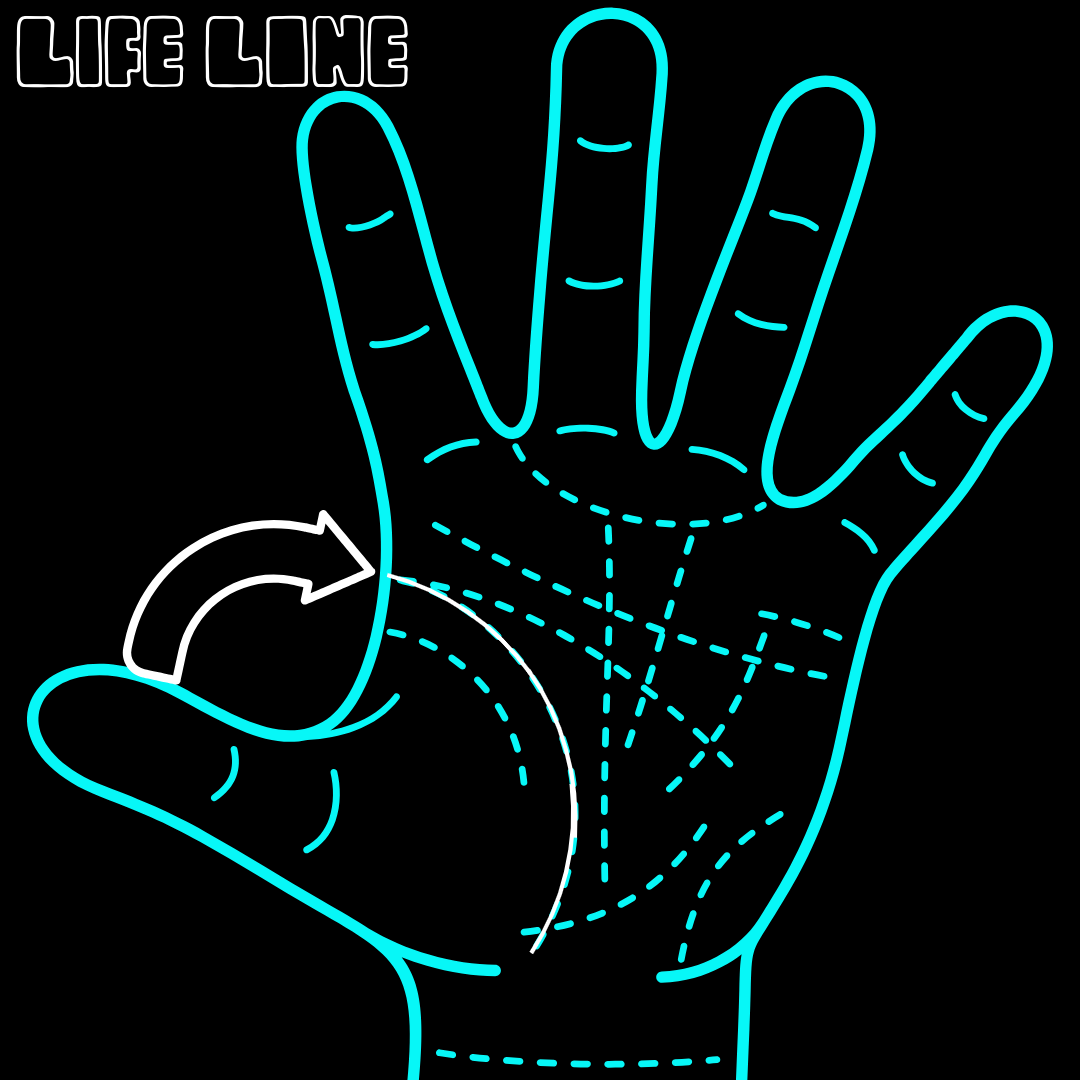
Now, again, the life line is one of the three major lines of the palm, which should stand out pretty easily. While the heart line sits at the top of the palm near the fingers, the head line is right below it. Oftentimes, the head line extends across the palm in the opposite direction of the heart line.
If you have successfully located your heart line and your head line, you’ll be able to locate the life line from there. Generally speaking, the life line is frequently somewhat connected to the head line. Both the head line and the life line begin above the thumb in the mount of Venus and extend toward the center of the palm and downward.
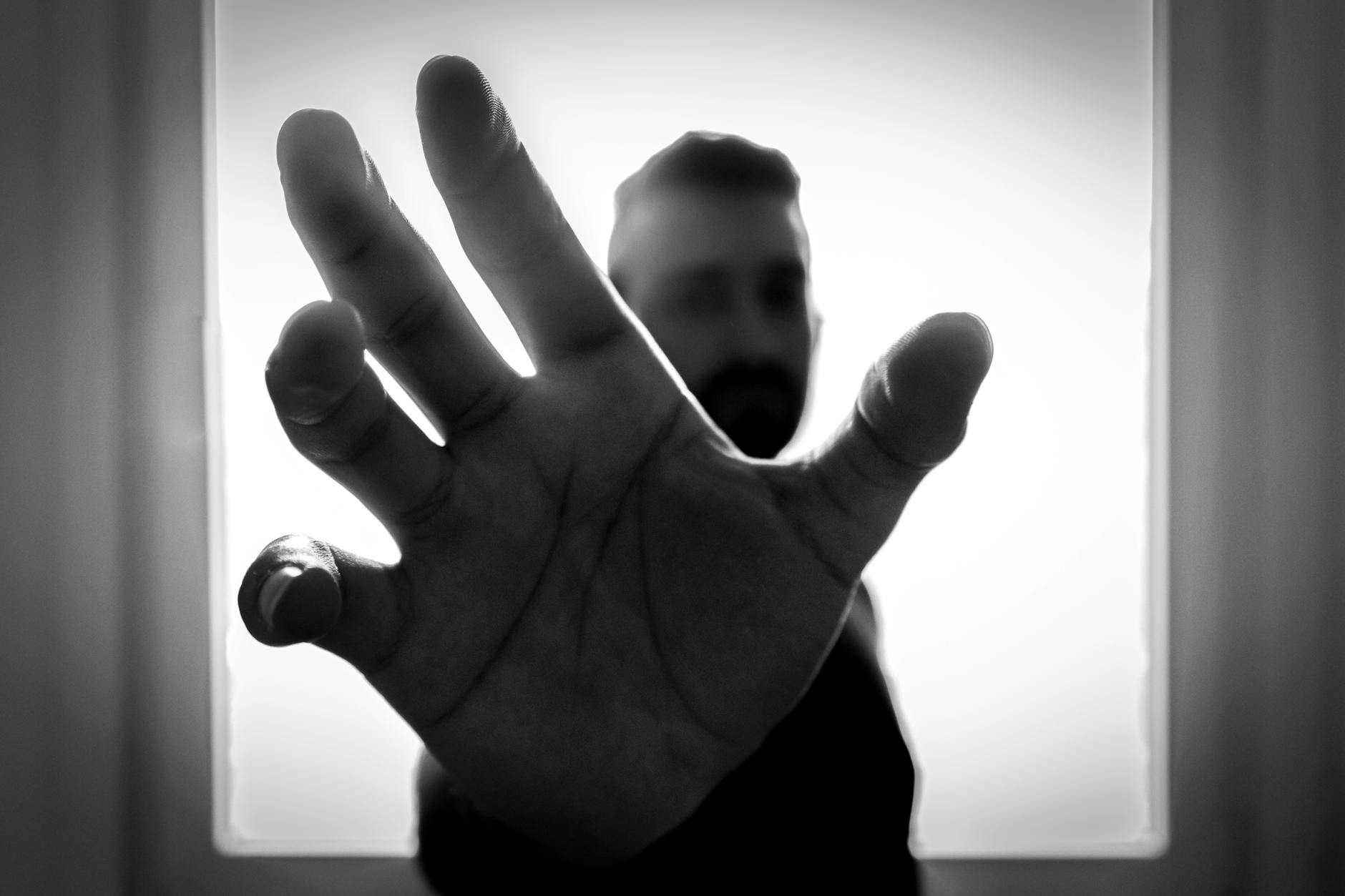
In the example in the image below, you can find these three major palm lines. The line at the top, which begins on the pinky side, is the heart line. The line underneath it is the head line, and it starts on the thumb side. Which one is the life line?
How Does Your Life Line Look?
The life line can vary significantly in depth, length, and curvature, offering a wide variety of interpretations for each individual. The two images above and below serve as a basis for the appearance of the life line. If yours is much different, that’s okay.
The appearance of the life line can tell a great deal about a person’s overall life. Various characteristics can be observed. Some things to analyze regarding this line may include:
- Length: Is your life line long, short, or of average length?
- A short life line is usually not longer than the head line and may not stretch to other mounts.
- An average life line is longer than the head line and reaches at least one or two other mounts.
- A long life line stretches down to the base of the palm.
- Depth: Is your life line deep in comparison to the other lines of the palm? Is it more shallow than the head line or heart line?
- Curvature: Does your life line have a curve to it? Is it straight? If it does curve, how much curve does it have to it? On what areas of your palm does it curve into?
- Branches and Breaks: At any point in your life line, is there a gap in it, where it seems to briefly fade? Are there any finer lines that branch off of it?
- Attachment to Head Line: Is the beginning of your life line attached to your head line? If not, how much space is between the lines? If so, where do they begin to separate?
Different Types of Life Lines
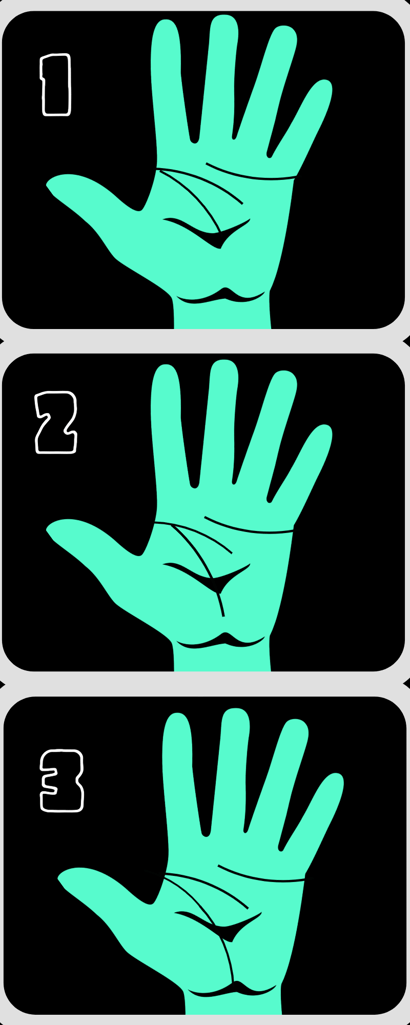
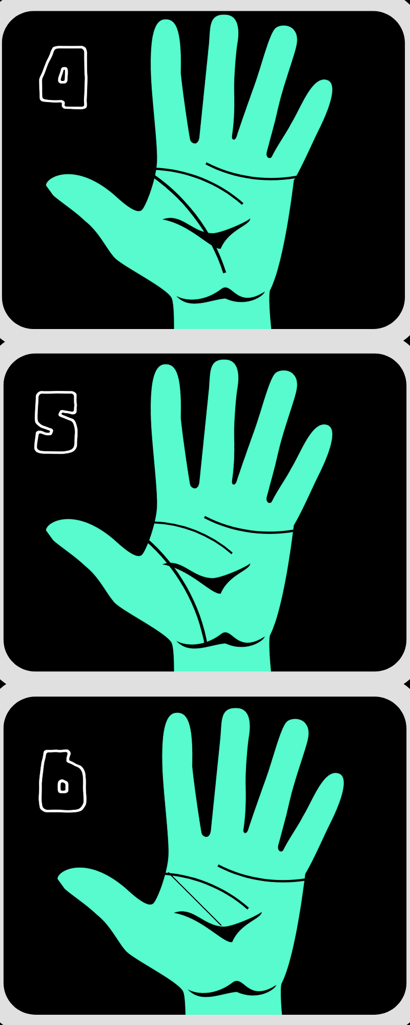
Below, there are six examples of the most common types of life lines. Each one has an original meaning and can perhaps tell you something about your life’s experiences. If you do not see a line similar to yours, you may need to do further research.
Keep in mind that each palm is different from the next. This is usually even true when it comes to your own two palms. Make sure to check the appearance of both of your palms, as they’re unlikely to be the same.
Example 1: A shorter life line might suggest a more cautious nature, while you’re a pretty practical type of person. You could find yourself easily influenced by others, however, or a live a life marked by significant changes. Although you’re down to earth and easy going, your immune system may not be great, with the possibility of lifelong bouts of illness or autoimmune diseases.
Example 2: A deep, clear life line indicates robustness and steadfastness. You may feel that you have been given more responsibility than others, but you’re also able to handle it more than many others could. You possess power reserves, and you can access them whenever it feels necessary. There could also be somewhat of a tendency to be idealistic rather than realistic.
Example 3: A longer life line is often interpreted as a sign of vitality and strength. Throughout your life, you may stay quite healthy, rarely having to visit the doctor for any mysterious symptoms that cause you major discomforts. You probably heal quickly and have loads of energy to spare. When life is chaotic, you handle the struggle well and bounce back quickly, with optimism for the future.
Example 4: If there is space between the head line and the life line, it may suggest that you have independence of thoughts and don’t easily conform to society’s ideas. Your life may seem very distinct from others, with a free flow of creative ideas. You might be a thinker rather than a doer, but you’re adaptable in most situations and move with the changes of life, openly learning as you go along.
Example 5: Whenever the life line is close to the thumb and begins lower down on the hand, it’s usually an indication of being intimacy avoidant. You may shy away from gaining deep feelings for others and could dress rather conservatively. It’s possible that you avoid situations that involve anything emotional, and you may dismiss the feelings of your friends and family. However, you’re quite creative. Business partnerships that give you an ability to use your talents may financially serve you well.
Example 6: A straighter life line that stops around the center of your palm might indicate a significant life change at some point, but likely within your thirties. You probably have a straightforward nature and a direct approach to goals. While you’re less likely to be a risk-taker, you’re more likely to make choices that bring you stability.
Other Life Line Considerations
- A faint or broken life line may suggest a tendency towards fragility or vulnerability.
- An arched line is generally considered a sign of enthusiasm and a zest for life.
- Additional markings that branch off the life line or breaks within the line can suggest various life experiences, changes, or challenges. For example, a break followed by a new section might indicate a significant turning point, such as a change in lifestyle, career, or health.
Leave a Reply
You must be logged in to post a comment.