
Overview
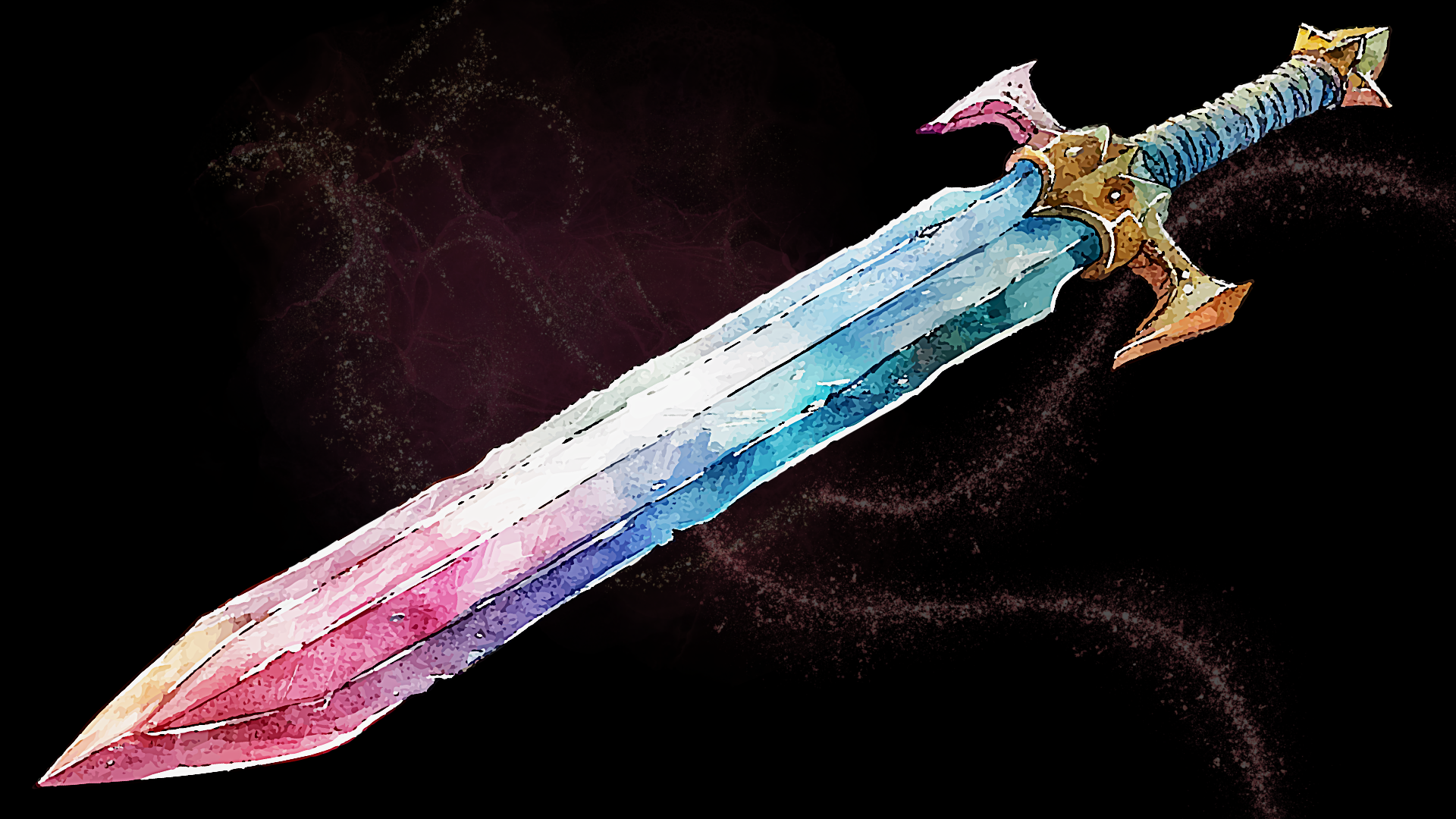
Have you ever heard someone refer to a situation as a ‘double-edged sword’? This phrase typically means that the object or experience has both positive and negative aspects. In this post, we will explore the symbolism of the double-edged sword through the lens of duality, examining why this comparison is frequently made.
Symbolism Brief
Symbolism is often used to draw deeper meanings from stories, art, images, and more. Helping us to convey complex ideas that aren’t easily expressed with language, symbols encourage more abstract interpretations and reflections. Therefore, it’s common practice for us to connect ideas, feelings, and thoughts to materials found within our environments.
Symbol of the Sword
Of course, whether the sword is referred to as being double-edged or not, the majority of swords are. This means that they naturally have a dual nature. Not only are they used for harm, they’re equally used for protection. Meanwhile, they’re seen as symbols of justice, authority, courage, truth, honor, loyalty, and strength.
Swords are designed to be a weapon, almost always with the intention to kill. However, it’s important to consider the motivation behind the sword’s wielder. Do they intend to seek revenge, protect their love, be a part of a battle, or something else? Regardless, whoever swings the sword does so because of the power it contains.
Legend and Myth
Personally, some of my favorite stories involve epic sword battles. However, the best ones also capture the hero on his rise to power. There’s also a tendency toward a few themes surrounding love, loss, betrayal, and revenge. These are the elements that help the swordsman find his courage, which motivates him or her to seek justice.
“With great power comes great responsibility.”
— Stan Lee
A Few of the Greatest Sword Stories Ever Told
Although swords are hardly used in the modern world as a means of protection anymore, some of the greatest stories ever told involve the use of them. While guns have become the weapon of choice during times of war, writers today still frequently prefer creating stories involving the romantic nature of swords. Let’s look at a few of these widely-recognized and well-respected stories:
- 300 (Spartan Warriors)
- Based on ideas surrounding ancient Italy and the Spartans
- Beowulf (a major literary work, highly showcased)
- Hero’s battle and epic legend
- Game of Thrones, a book series extremely popularized by HBO
- Heavy focus on sword fighting throughout the series
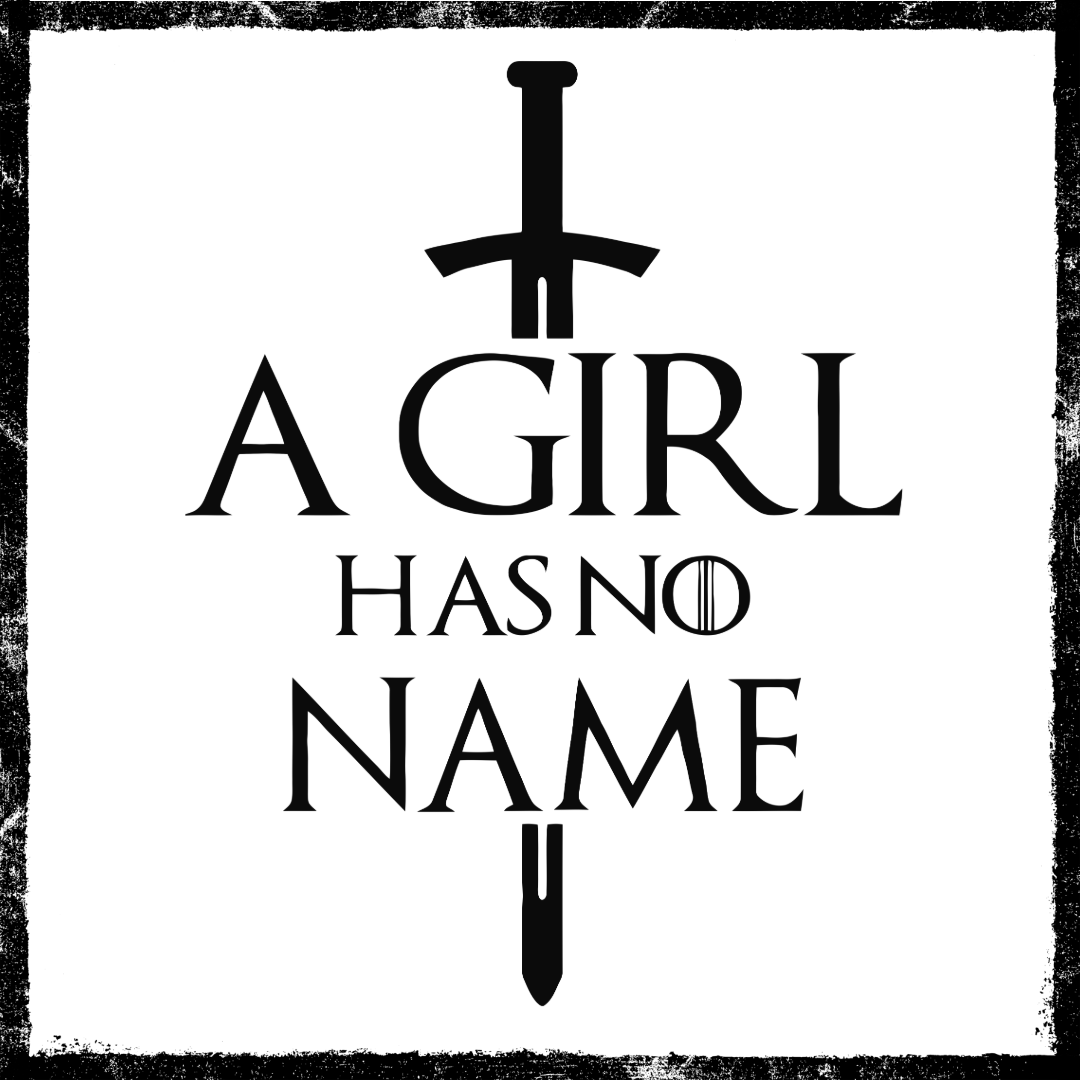
- Jon Snow’s and Aria Stark’s swords, “Longclaw” and “Needle”, are highlighted
- Harry Potter and the Deathly Hallows
- Mini story or backstory called ‘The Deathly Hallows’
- Sword of Gryffindor
- King Arthur and the Knights of the Round Table
- Excalibur, the sword, is a major focus in this story
- Romeo and Juliet
- Murder and revenge amongst opposing families
- The Lord of the Rings
- Includes various sword battles
- The Story of William Wallace
- Based on a real person and true events during the 13th century when Scotland tried to gain independence from the English
- Wallace’s story grew in recognition from the film Braveheart
Duality
To truly understand the nature of the ‘double-edged sword’, it’s vital to grasp the meaning of duality. This is because when it comes down to it, the interpretation of the phrase derives a closely-linked meaning. So, what is it?
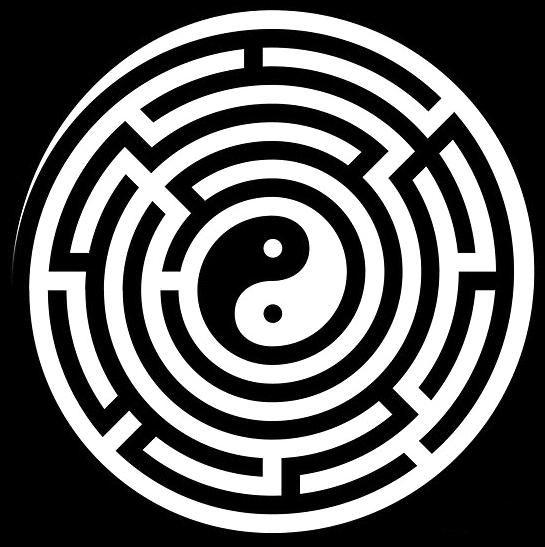
Well, duality points to two opposing sides of a single thing or idea. It is when a pair of completely contrasting things work together in unison. While nothing about these sides are alike, they still exist as only one-half of a whole.
Expressing Duality
Playing a major role within our everyday lives, duality can be found in various other phrases commonly used. A few of them are “as above, so below,” “as within, so without,” “what goes up, must come down,” “opposites attract,” and “two sides of the same coin.” All these sayings derive their interpretations from the idea of duality.
Examples of Duality
For example, a human being is made from the egg produced by the female sex, as well as the sperm released through the male sex. Without either an egg or a sperm, a human baby can’t be created. Even if an egg and sperm are put together within a medical lab, the fact remains that one came from the female and the other from the male. In short, it is medically necessary for both female and male, with opposing reproductive organs, to create human life.
*Please note that gender is not included in the above equation, as it is a relevant social construct with multiple variations. For the purpose of the example, we’re simply pointing to physical reproductive organs and their functions.*
More Examples of Duality Include:
- Daytime and Nighttime
- Masculine and Feminine
- Good and Evil
- Heaven and Hell
- Positive and Negative
- Angels and Demons
- Life and Death
- Love and Hate
The Double-Edged Sword
Now, let’s break down the meaning of the ‘double-edged sword’. Literally speaking, it’s a sword that has two sharp edges, allowing it to cut in both directions. This design is practical for combat, giving the swordsman an ability to quickly and effectively swing the blade in any direction.
Furthermore, the ‘double-edged sword’ also serves as a metaphor for the dual nature of many aspects of life. It’s a reminder that with every action there is a reaction, which usually results in something positive and negative. We’re reminded of this through another phrase about duality, which is that “you win some, you lose some.”
Let’s Duel!
Something I’ve pondered, which seems quite ironic, is the word “duel” in reference to two people sword-fighting. While it has a different meaning than “dual,” it sounds the same. Giving so much away, it perfectly describes our symbolic study defined within this post. These connections help us to better understand our ‘double-edged sword’.
Our Story
Oftentimes, whenever we converse about swords, we’re generally talking about the ones that have a double-edge. Likewise, the majority of life’s experiences tend to have a double-edge. While we lose our youthfulness when we age, we also gain wisdom and learn how to better navigate life’s journey the older we get. When we make mistakes, we suffer consequences, but we also gain greater self-awareness through them and become better prepared for the future.
In literature, mythology, and even our everyday lives, the double-edged sword represents the idea that power and strength come with inherent risks. Again, a sword can protect you, but it can also harm you, while it’s intended purpose is to do both. Lastly, the double-edged sword is a classic theme we see echoed throughout history and storytelling because it reveals the grandest story we know: human-nature.
References
- Blind Harry. The Acts and Deeds of Sir William Wallace, Knight of Elderslie. Edited by William Dunbar, 1488.
- Heaney, Seamus, trans. Beowulf (1999).
- Malory, Sir Thomas. Le Morte d’Arthur: The Adventures of King Arthur, Sir Lancelot, and Sir Gawain (1485).
- Martin, George R.R. A Game of Thrones. Bantam Books, 1996.
- Miller, Frank, and Lynn Varley. 300. Dark Horse Comics, 1998.
- Shakespeare, William. Romeo and Juliet. Edited by David Bevington, Bantam Classics, 1988.
- Tolkien, J.R.R. The Lord of the Rings (1954-1955).
Leave a Reply
You must be logged in to post a comment.