
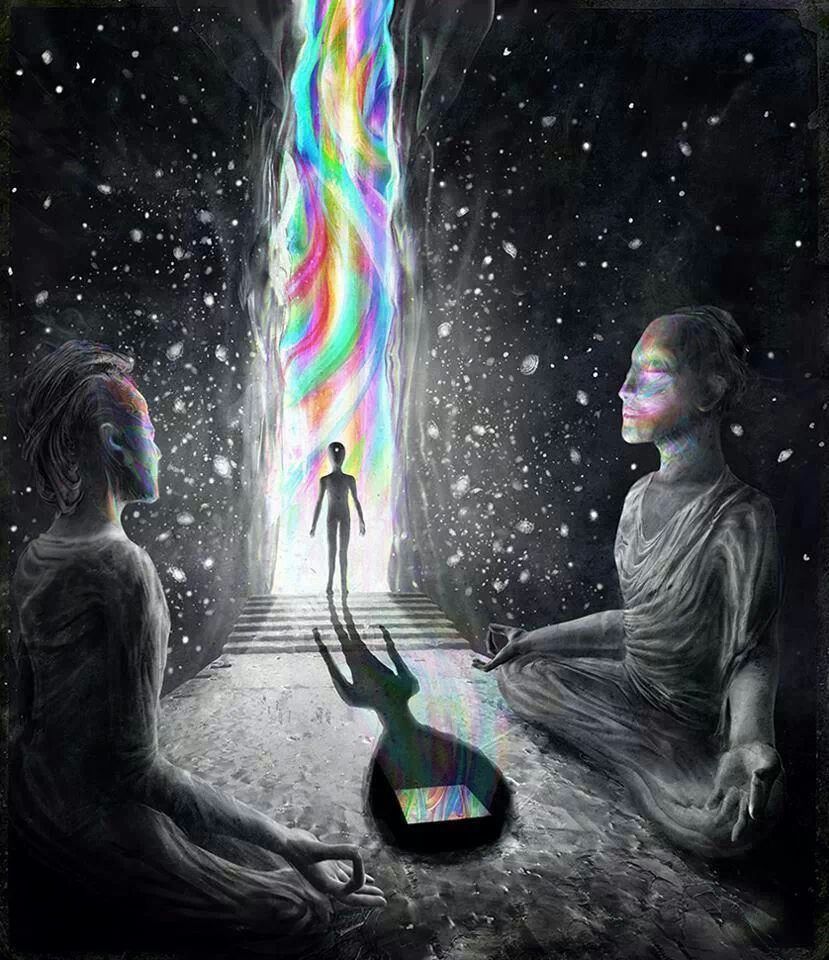
Chakras are believed to be the energy centers within the human body that are responsible for regulating our physical, mental, and emotional well-being. There are seven main chakras located along the spine, from the base of the spin to the top of the head. Each chakra is associated with a specific color, area of the body, and a set of specific functions. Likewise, all chakras are said to correspond to different aspects of our lives.
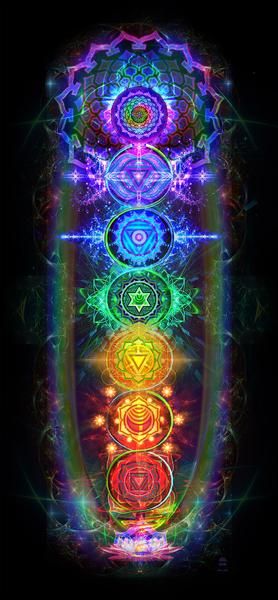
Through these seven chakras, all energy apparently flows. If you need to exert energy from your hands or feet, energy must flow to/from one of the main energy points first. This happens with a relevant channel of the body called the spine. First, signals are sent from the brain and transmitted to that part of the body using the spine as a sort of highway.
Like a tree, our spinal cord is the source in which our roots, (or legs and arms), keep us thriving here on the earth. The spine moves data from brain to body. Likewise, the leaves, or our brains, form new connections and process data to help us grow, adapt, and change.
Oddly enough, the seven colors of the chakras are the same seven colors in the rainbow, even in the same order. You can remember this using an acronym, which sounds like someone’s name: R.O.Y.G.B.I.V. Roy G. Biv stands for Red, Orange, Yellow, Green, Blue, Indigo, and Violet.
Someone who is usually an expert of the chakras is called a Yogi. A Yogi is a person who is a master of Yoga. While many people believe Yoga is a modern way to become fit, its practice often involves connecting more deeply to the flow of energy through the chakras.
Yoga is about connecting to the body and sensing the energy that flows. It helps to feel where the energy is stifled, as well as where it is free-flowing. By practicing yoga, we can map out which areas of our bodies need more attention and thus, becoming healthier in our overall lives.
According to traditional Hindu and Buddhist beliefs, when the chakras are open and balanced, energy can flow freely throughout the body, leading to a sense of well-being and harmony. However, if a chakra becomes blocked or imbalanced, it can lead to physical, mental, or emotional problems.
The Seven Chakras
Chakra 1: The Base — Muladhara
This Chakra is located at the base of the spine, or right at the tailbone. Muladhara is red and it’s function is responsible for basic needs. Understanding how to water and feed oneself, as well as how to survive financially or for survival. The most primal chakra, it is our foundation in which we live and grow. Being fearful for our lives, or feeling threatened without a true cause for harm, could mean it’s blocked.
Chakra 2: Sacral Chakra — Swadhisthana
Located under the naval and around the genitals, this chakra is responsible for energy flow of our emotions, sexual energy, and creativity. It is the second chakra, from the bottom and up, and is orange. Often used over-abundantly, this chakra can create quite a bit of chaos in our lives if that’s the case. Being careless and/or emotionally vulnerable could mean Swadhisthana is blocked. A healthy second chakra is loving thy neighbor, but no more or less than self.
Chakra 3: Solar Plexus Chakra — Manipura
The third chakra, which is yellow and at the center of our spine. Like the sun and it’s planets, everything seems to revolve around the solar plexus chakra. Manipura always reminded me of the word “manipulate” because this chakra is all about the ego. Ego protects us, but too ego can bring narcissism. A blocked third chakra, however, can mean a lack of confidence or self-doubt. This chakra is the responsible for energy in our guts and all of it’s organs. With a very bad diet, surely there will also be very poorly functioning source of confidence in self. A healthy one is no more and no less than self acceptance.
Chakra 4: Heart Chakra — Anahata
Green, but without envy, the heart chakra forms the bridge between the upper and lower quadrants in which our energy is dispersed. There are three above it and three below it, which is one part spiritual and one part physical. It is the point in which the top and bottom of the number “8” comes together. Peace, love, and contentedness are the results of a healthy Anahata.
Chakra 5: The Throat Chakra — Vishuddha
Responsible for speaking our truth, communicating clearly and effectively, and expressing ourselves as individuals, is the job of Vishuddha. The fith chakra is blue and is also related to sound and music– or the understanding of movement and vibration. Someone who has a blocked Throat chakra will often find difficulty is explaining to others their true thoughts and feelings, even if they know they’re being unfair to themselves. A healthy throat chakra feels like a sense of personal power within themselves- from speaking their personal truths.
Chakra 6: The Third-Eye Chakra — Ajna
A mixture of blue and purple, this chakra is located between the eyes and slightly above the eyebrow line. The third–eye chakra is what gives us insight into information we often feel is beyond us; aka our intuition. It is the eye we possess that we cannot see because we see things without it that don’t require eyes. Anja is what gives us divine wisdom. Improper use of this chakra can mean being too whimsical or being grounded very little. This chakra operates on a level beyond just the surface.
Chakra 7: The Crown Chakra — Sahasrara
The final chakra, located at the top of the head, is violet. The purpose of the crown chakra is to connect our individual body to consciousness– a place in which we’re all connected. To achieve higher consciousness and to have a true understanding of the balance between both love and light and to see the necessity for both to exist in tandem, is having a balanced Sahasrara. The Seventh chakra is very often under-nourished and to have little to no faith, or feeling disconnected from others, is often a sign of this.
From Within the Labyrinth,
–
-Lakin <3
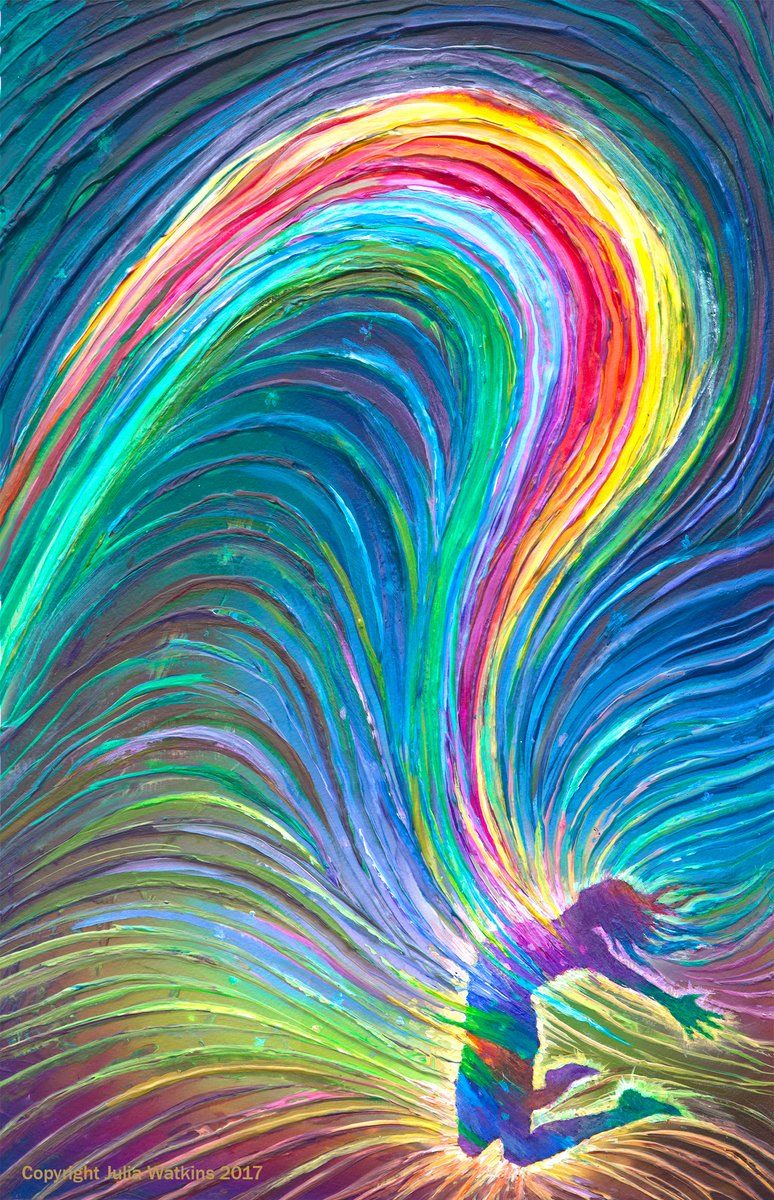
Art by Julia Watkins 2017
Leave a Reply
You must be logged in to post a comment.