
Overview
The concept of the collective unconscious represents one of the most fascinating and enigmatic aspects of psychology. Despite its seemingly esoteric nature, the collective unconscious offers profound insights into human behavior, thought patterns, and shared experiences across different cultures and epochs. In this blog post, we will explore the multifaceted dimensions of the collective unconscious, including its definition, origins, mechanics, and its implications for various aspects of human life.
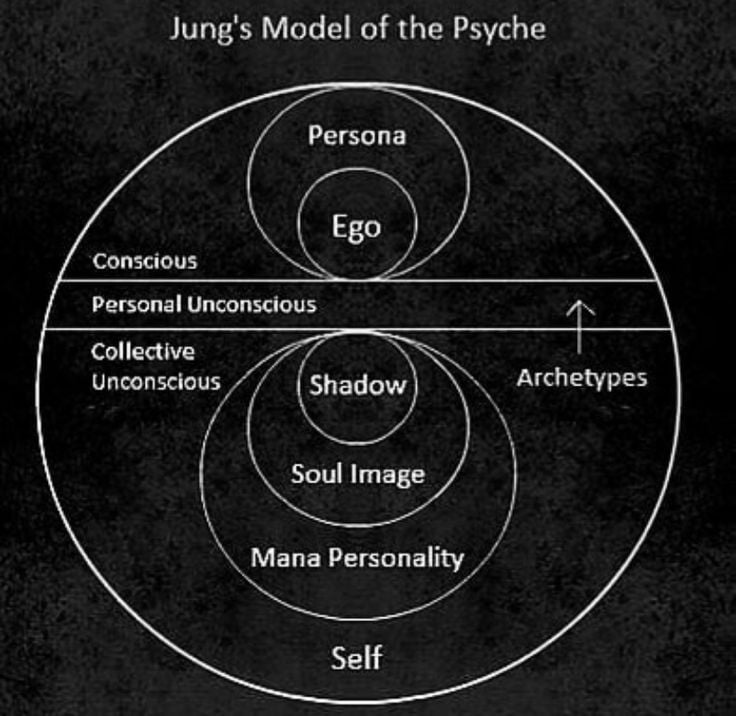
To truly understand the collective unconscious, it’s important that we recognize the layers of consciousness first. In short, within the layers of consciousness there exists the conscious mind and the unconscious mind. While we’re aware of the conscious layer, we’re unaware of the unconscious layer, which includes collective unconsciousness.
What is the Collective Unconscious?
While a bit of the unconscious layer is personal to us as a sort of hidden part of our personality, the collective unconscious layer is impersonal. It’s shared amongst all of humanity, being timeless and universal.
The term, “collective unconsciousness,” was coined by Swiss psychiatrist, Carl Jung, to signify a part of the unconscious mind that connects beings of the same species through an invisible fabric.
The collective comprises memories, experiences, and symbols that are universally inherited. It also contains archetypes, which are innately understood symbols and themes that influence human thoughts, behaviors, and experiences. These archetypes are regularly apparent to us through dreams, art, myths, and religious beliefs, serving as powerful ideas that shape the way we perceive the world.
Key Components
- Primordial Images: Within the collective unconscious, Jung believed that there existed what he called, “primordial images,” which derives from humanity’s shared history and genetic links. These images are fundamental representations that express the collective experiences of our ancestors. However, many of these images revolve around the origins of life itself and the greater structures of existence, such as the cosmic landscape.
- Archetypes: Archetypes often embody fundamental human experiences and can take the form of characters, themes, or symbols. Examples include the Hero, the Mother, the Shadow, and the Orphan. Meanwhile, they serve as our basis for understanding typical behavior present within all humans. Although humanity collectively changes, adapts, and evolves, archetypes are forever present within our nature and need no explanation for us to comprehend them.
Archetypes and the Collective Unconscious
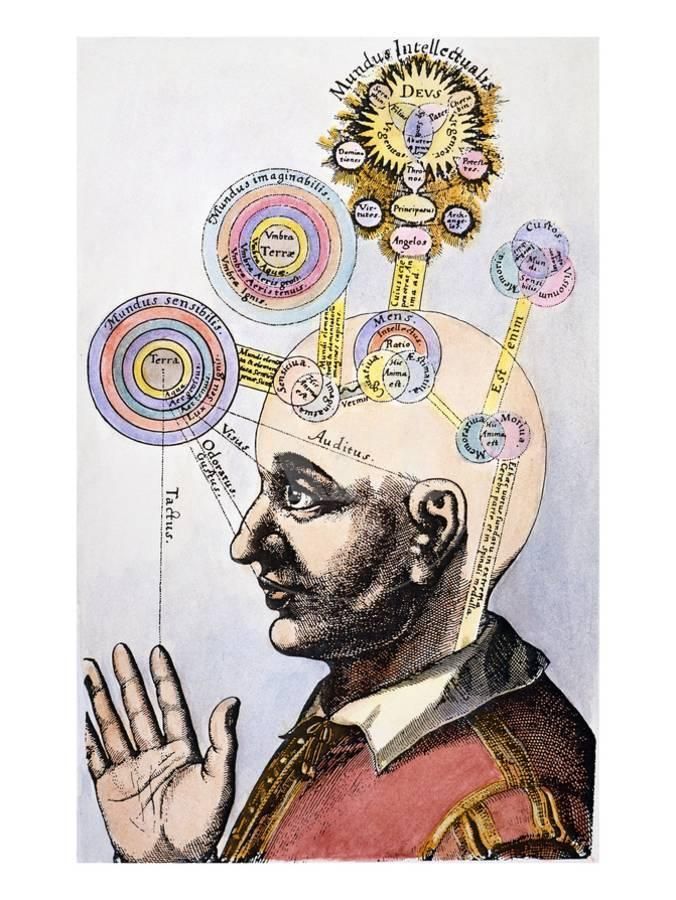
By consciously recognizing archetypal patterns, we can better understand our own motivations, struggles, and aspirations. As individuals, we encounter various types of events throughout our lifetimes. As a result, we frequently and unconsciously reference archetypes to navigate our own experiences. This means that they’re almost always present within our active, daily lives.
For instance, when we confront challenges in life, we may embody the Hero archetype to gather the strength and courage needed to get through that time in our lives. That’s because this particular archetype is a figure who undergoes difficult trials, fighting against nearly impossible odds, but eventually comes out victorious. This dynamic relationship fosters a deeper comprehension of our nature, bridging the individual and the universe into oneness.
Examples of Archetypes
While there are many other archetypes, such as the Maiden, the Trickster, and the Lover, we’ll look at the few of them below to see where we most likely recognize them.
- The Orphan: Alone, struggling to find their place in the world, but seeks belonging.
- Harry Potter
- Oliver Twist
- Cinderella
- The Hero: Courageous warrior, fighting against negative forces to come out victorious.
- Hercules
- Superman
- Odysseus
- The Shadow: Manifestation of the repressed, darker aspects of the personality.
- Voldemort
- Darth Vader
- Maleficent
- The Sage: Wise mentor who helps the protagonist and guides them on their journey.
- Dumbledore
- Yoda
- Gandalf
- The Mother: Representation of fertility, gentleness, and nurturing feminine role.
- Virgin Mary
- Mother Teresa
- Gaia
- The Rebel: Challenges authority and advocates for major changes or revolution.
- Robinhood
- Katniss Everdeen
- Tyrion Lannister
How Does the Collective Unconscious Work?
The workings of the collective unconscious can be better understood through our personal interaction with the world and others. We may catch glimpses of it whenever we suddenly connect with tales as old as time which are embedded within the human framework. While we may not consciously acknowledge the influences stemming from the collective unconscious, they still permeate cultural norms, ancient belief systems, and interpersonal connections.
For instance, a person may dream of a wise old man offering them guidance. In Jungian psychology, this would suggest that their dream involves an archetypal figure known as the “Sage.” Such images resonate because they originate from the data held deeply within the collective unconscious. This interconnectedness underscores the idea that humans are not isolated beings. Instead, they belong to a larger tapestry known as the collective.
Who is Included in the Collective Unconscious?
Every individual from diverse backgrounds and experiences is influenced by the collective unconscious. Jung believed that regardless of one’s cultural context, people are shaped by similar patterns of thought and behavior that arise from the collective unconscious. This influence may manifest in various forms—cultural narratives, societal values, personal relationships, and even individual crises.
Essentially, this means that at the root of consciousness itself, is the collective. If one’s consciousness is a tree, their conscious mind would be the branches, with their conscious experiences serving as the leaves. Likewise, their unconscious mind would be the trunk as it’s the basis and the structure. Lastly, the roots would be the collective unconscious, which connects to all other trees within a forest.
Where is the Collective Unconscious Located?
Jung argued that the collective unconscious is not a physical entity located within the brain or body. Instead, it’s a psychic construct. It functions similarly to a database of shared human experience that influences individual consciousness.
He described it as a layer of the unconscious mind that extends below the personal unconscious. This means it does not reside in specific neural pathways or brain structures but is actually a conceptual framework through which we can understand our humanness.
Jung perceived it as a layer of the psyche, existing deep within the unconscious mind and accessible through various means, including dreams and symbols. While difficult to quantify or locate scientifically, the collective unconscious can be understood as a fundamental aspect of human psychology that influences us in different ways.
The Origins of the Collective Unconscious Concept
The origins of the collective unconscious can be traced back to Jung’s early work with patients undergoing analysis. Likewise, his study of mythology, religion, anthropology, folklore, and indigenous cultures revealed that humans across the world and throughout history had common themes and patterns. Jung observed recurring symbols through various types of human narratives, leading him to conclude that these patterns were not merely coincidental.
In his pioneering book, “The Archetypes and the Collective Unconscious” (1959), Jung delineates the theoretical framework for understanding this shared repository of human experience. Today, his ideas resonate across various fields, including psychology, literature, and cultural studies, illustrating their enduring relevance.
References
- Jung, C. G. (1959). The Archetypes and the Collective Unconscious. Princeton University Press.
- Jung, C. G. (1964). Man and His Symbols. Anchor Books.
- Hillman, J. (1996). The Soul’s Code: In Search of Character and Calling. Random House.
- Campbell, J. (1968). The Hero with a Thousand Faces. Princeton University Press.
- Meissner, W. W. (2010). “The Interpretive Tradition in Psychoanalysis: A Study in the History of Ideas.” The Journal of Analytical Psychology, 55(5), 507-519.
- Neumann, E. (1954). The Great Mother: An Analysis of the Archetype. Princeton University Press.


Leave a Reply
You must be logged in to post a comment.