
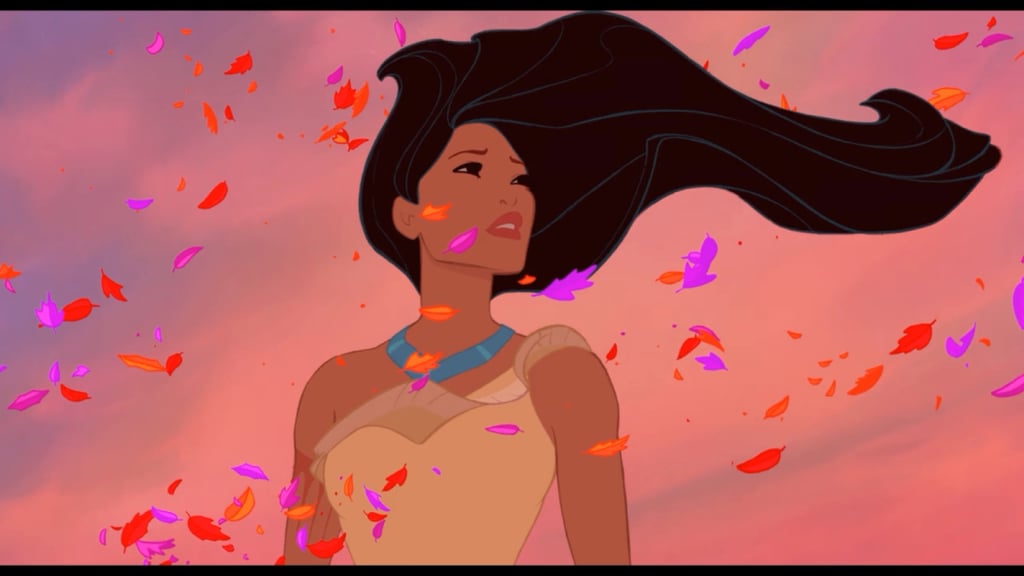
When it comes to stories, there have been a great number of beautiful ones told. Living in a corrupt world filled with suffering, sorrow, and greed frequently results in humanity’s apparent need for heartfelt creations of art. There is a particular story, however, that stands out in my mind, which I adored as a child, and it still plays a subtle role in my life today.
When I was a little girl, I wasn’t a fan of Disney princesses. I preferred the independent female character leads who often defied the rule of men. Mulan and Pocahontas were my favorites as they possessed a certain amount of (what I’d describe as) “pure, feminine badassery.”
Fact Vs Fiction
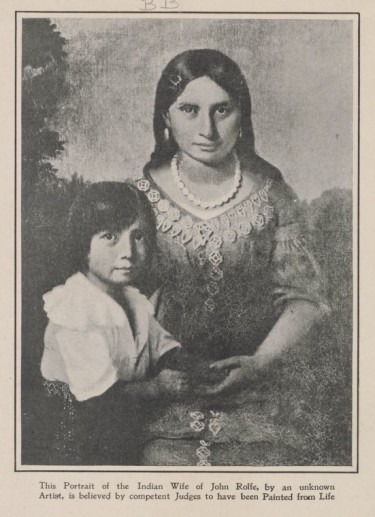
Once I became an adult, I learned that one of these stories was a romanticized version of true, historical events. In fact, it could hardly be further from the truth of what happened to certain people from the past. What actually took place in Pocahontas’ life is nothing short of a horrific nightmare for, what was once, another little girl.
Kidnapped
In what is now known as Jamestown, Virginia, a man named John Smith arrived in 1607. While the movie portrays Smith as Pocahontas’ love interest, he was actually one of her captors. Another man, by the name of Samuel Argall, assisted Smith in taking Pocahontas hostage. Argall was an English Adventurer, who was unfortunately known for his use of aggressive tactics.
At around the age of ten or eleven years old, this child, Pocahontas, was the daughter of Powhatan, the paramount chief of Tsenacommacah. Being no match for the weapons Smith and his men brought to her home, even the Chief didn’t stand a chance against the English and their guns. Likewise, her people had little power to stop the men from taking her.
Kidnapped, the real Pocahontas was taken back to England and was later forced to marry to John Rolfe, who introduced tobacco to Virginia. Of course, she was forced to convert to Christianity and given an English name, Rebecca. Yet, she was made into a political statement and publicly declared as a “civilized savage.”
Ill-Fated
The marriage between Rolfe and Pocahontas was a political one. It was claimed as a peaceful negotiation between the English settlers and Powhatan’s tribe. By sixteen to seventeen years of age, Pocahontas gave birth to her and Rolfe’s first child, Thomas Rolfe, who was born in England in 1614.
Her fate only grew colder shortly after Pocahontas became a new mother. A few years later, the young, indigenous woman became severely ill, as she possessed no immunities to the diseases present in England at that time. At only twenty-one years old, in the year 1617, she died known as John Rolf’s wife, Rebecca the “civilized savage.”
Far away from home, the little girl, Pocahontas would never be seen by her family and friends again. Powhatan’s people eventually suffered the same types of endings, including European disease, loss of land, and murder. Consequently, the outcome for the majority of Native Americans thereafter the life of Pocahontas didn’t improve either.
Stephen Schwartz
Despite the inaccuracies of Disney’s animated and romanticized story of Pocahontas, I still believe there is something within it that is worth mentioning. Although I’m now an adult who has learned the truth of her story, I believe the real one should be told. I wonder if that little girl, who was first named Pocahontas, had left us a message, what would she say?
In another reality, if Pocahontas and Powhatan’s people had had the means to stand up to their oppressors and fight back, what could they teach them? Stephen Schwartz, lyricist for Disney’s Pocahontas soundtracks, wrote an incredibly powerful set of lyrics for the song ‘Colors of the Wind.’ To me, this song says that despite anyone’s obvious differences, we’re all universally connected.
I feel that perhaps, if anything, Pocahontas would have wanted her captors to understand that they still had much to learn. What a silly idea, I think she’d have thought, for any man to believe he could own the earth. Lastly, I think that Pocahontas, even as a child, saw these men and felt that they were the ignorant savages because despite them having eyes, there were so many things they didn’t see. Let’s look at Schwartz’s lyrics.
‘Colors of the Wind’
From Disney’s Pocahontas soundtrack, written by Stephen Schwartz.
You think I’m an ignorant savage
And you’ve been so many places
I guess it must be so
But still, I cannot see
If the savage one is me
How can there be so much that you don’t know?
You don’t know
You think you own whatever land you land on
The Earth is just a dead thing you can claim
But I know every rock and tree and creature
Has a life, has a spirit, has a name
You think the only people who are people
Are the people who look and think like you
But if you walk the footsteps of a stranger
You’ll learn things you never knew, you never knew
Have you ever heard the wolf cry to the blue corn moon?
Or asked the grinning bobcat why he grinned?
Can you sing with all the voices of the mountain?
Can you paint with all the colors of the wind?
Can you paint with all the colors of the wind?
Come run the hidden pine trails of the forest
Come taste the sun sweet berries of the Earth
Come roll in all the riches all around you
And for once, never wonder what they’re worth
The rainstorm and the river are my brothers
The heron and the otter are my friends
And we are all connected to each other
In a circle, in a hoop that never ends
How high does the sycamore grow?
If you cut it down, then you’ll never know
And you’ll never hear the wolf cry to the blue corn moon
For whether we are white or copper skinned
We need to sing with all the voices of the mountain
We need to paint with all the colors of the wind
You can own the Earth and still
All you’ll own is Earth until
You can paint with all the colors of the wind
References:
- Townsend, Camilla. “Pocahontas and the Powhatan Dilemma.” New York: Hill and Wang, 2004.
- Rountree, Helen C. “Pocahontas’s People: The Powhatan Indians of Virginia Through Four Centuries.” Norman: University of Oklahoma Press, 1990.
- Kupperman, Karen Ordahl. “Indians and English: Facing Off in Early America.” Ithaca: Cornell University Press, 2000.
- Price, David A. “Love and Hate in Jamestown: John Smith, Pocahontas, and the Start of a New Nation.” New York: Alfred A. Knopf, 2003.
- Gleach, Frederic W. “Powhatan’s World and Colonial Virginia: A Conflict of Cultures.” Lincoln: University of Nebraska Press, 1997.
- Custalow, Linwood “Little Bear” and Angela L. Daniel “Silver Star.” “The True Story of Pocahontas: The Other Side of History.” Golden: Fulcrum Publishing, 2007.
Leave a Reply
You must be logged in to post a comment.