
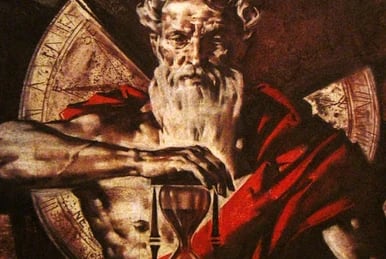
As we gaze up at the night sky, the celestial bodies that twinkle above us not only inspire wonder, but they also carry deep connections to our cultural, mythological, and astrological identities. The planets of our solar system provide profound insights and reflections that influence many types of belief systems. Furthermore, each one is represented by their respective names rooted in ancient myth.
Symbolic Significance of the Planets
Each planet in astrology can be described as having a certain set of characteristics that are unique to that planet. Much of these descriptions come from the world of symbolism. Now, you may be wondering what this has to do with mythology.
Well, the symbolism found in each of the planets comes from ancient cultures, along with their mythology. Ancient myth is greatly symbolic. Not only have these ancient cultures influenced astrology, but also modern astronomy.
Basis of Astrology
To understand how astrology is rooted in ancient mythology, we must first have a basic understanding of the planets and their symbolism.
Astrology is predicated on the idea that the positions of celestial bodies not only influence all other bodies within our solar system, but also that which lives upon those planets. This idea includes natal astrology, which is the chart drawn from the details of one’s birth, and is believed to shape personality traits and life events. In short, astrology is about the cosmic circumstances that ripple through the universe and influence mankind.
The Planet’s Characteristics
Each planet governs specific aspects of life. This is due to the characteristics of each of the planets, with each one being unique from the others. Let’s study them briefly below before moving on to their mythological significance.
| Planet | Known For |
|---|---|
| ☿ Mercury | Communication, intellect, thought, language, and reasoning |
| ♀Venus | Love, beauty, art, sensuality, and romance |
| ♂ Mars | Courage, aggression, leadership, passion, and action |
| ♃ Jupiter | Expansion, growth, luck, wisdom, and adventure |
| ♄ Saturn | Time, discipline, perseverance, responsibility, and structure |
| ♅ Uranus | Rebellion, individuality, innovation, freedom, and independence |
| ♆ Neptune | Dreams, illusions, imagination, empathy, and transcendence |
| ♇ Pluto | Transformation, power, sex, death, and rebirth |
The Planets and the Gods
One of the most interesting discoveries that I’ve ever made, which appears to be a little known fact, is how the planets received their names. Like I did, you may think that they were named by scientists, and likely those who discovered them. This is not the case!
What you do likely already know is that the names of the planets come from gods in Roman mythology. This means that each of our planets share a name with a Roman god. Did you know, however, that the names we call our planets are the same ones the ancient Romans called the planets by?
How the Planets Derived Their Names
That’s right! Modern science didn’t name the planets of our solar system. They were given the names we know them by in ancient Rome. Even more surprising still is that the names given to our planets by ancient Romans were not the first time the planets had names.
Before we called them Venus, Jupiter, etc., the planets were named after Greek gods. Some of the Greek names for the planets were Aphrodite and Zeus. Further back in time, the planets were once called by the names of the ancient Egyptian gods, where the Greeks and the Romans acquired much of the records regarding the planets.
Adopting the Gods
The names of the planets we know today derive primarily from Roman mythology, echoing the legacy of the ancient world and how human beings have sought to explain the cosmos. Planets reflect the myths of their namesakes and carry on the symbolism of the god’s characteristics. Mars as the god of war, Jupiter as the king of gods, and Saturn as the god of time and agriculture.
With that being said, it wasn’t modern scientists who gave the planets their names. Upon discovering the truth of their existence, proving ancient records to be true, the names were adopted. Therefore, the planetary names we call them by today were given to them by Ancient Rome.
Ancient Roman Mythology
- Mercury: Cunning messenger, known for his quick wit and speed.
- Venus: Represents sensuality, femininity, and romance.
- Mars: Embodies a fighting spirit, courage, and masculinity.
- Jupiter: Great protector who brings order and creates justice.
- Saturn: Involvement with time, prosperity, and tangible goods.
- Uranus: Represents the heavens and the sky. Father of the Titans.
- Neptune: Dominion over the sea, granting safe passage.
- Pluto: Ruler of the dead, with no attachment to life.
Ancient Greek Mythology
Now that we’ve established an understanding of the ancient Roman gods, we can take a look at their Greek counterpart.
- Hermes: God of travel, messages, thievery, cunning, and trickery.
- Aphrodite: Beauty who embodied love, romance, and attraction.
- Ares: Associated with brutality, courage, savagery, strength, and violence.
- Zeus: Protector of guests, enforcer of justice, and presides over Mount Olympus.
- Cronus: Attempted to murder his children, but was overthrown.
- Ouranos: Father of the Titans, ruler of the sky, and married to Gaia (Earth).
- Poseiden: Temperamental, having an ability to create natural disasters.
- Hades: Oversees the dead within the underworld and is not considered evil.
Astrology and Mythology
The relationship between the planets of our solar system, mythology, and astrology spans cultures and centuries, offering a bridge between the cosmos and the human experience. Understanding these mythological underpinnings helps us to unravel the astrological significance associated with each planet. Astrologers consider the traits of these deities, interpreting the planets’ positions in the celestial sphere to glean insights into human personality, behavior, and life events.
The names of the planets echo the stories of ancient deities, each imparting valuable lessons that reverberate through astrological interpretations today. By recognizing the bonds among celestial bodies, myths, and personal introspection, we can cultivate a richer understanding of ourselves and our place in the universe. As we marvel at the planets, let us continue to explore the lessons they offer, using ancient wisdom to guide our journey in the modern world.
References
- Campbell, J. (2008). The Hero with a Thousand Faces. New World Library.
- Cirlot, J. E. (1971). A Dictionary of Symbols. Routledge.
- Greer, M. (2001). The New Encyclopedia of Tarot. St. Martin’s Press.
- Noonan, T. (2020). Astrology, the Ancient Systems of Divination: The History and Practice of Astrology. Red Wheel/Weiser.
- Parker, J. (1996). Astrology: The Definitive Guide. Little, Brown and Company.
- Spence, L. (1982). An Encyclopedia of Occultism. New York, New York: Philosophical Library.
Leave a Reply
You must be logged in to post a comment.