

Astrology Overview
Many people from all over the world seem to adore astrology, but why? What is so fascinating about planets and zodiac signs? What exactly is astrology anyway? Let us tell you about astrology in this post!
Astrology is the study of the movements between stars, planets, and any other celestial bodies within space. Astrologers, on the other hand, study the data between those space objects; which they believe impacts life on planet Earth, including humanity. By examining the datasets of the movements of the celestial bodies, we believe that we can understand timelines, personalities, events, and more!
Astrology Background Info
Humans have been studying the stars for thousands of years. We’ve always relied upon the planets, moon, and stars to help them navigate, plan, and adjust. During the day, we count on the sun to light our path. At night we have the moon, which reflects the sun’s light, illuminating just enough to help us move along.
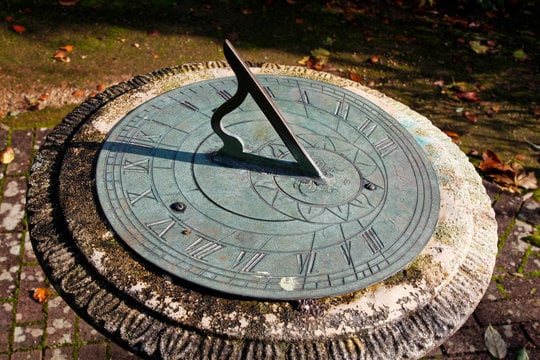
Before the digital age, we often looked at the sky to tell us which part of the day we were in. Think of a sundial. As the sun shines over the horizon in the morning, the shadow will cast in one direction, while casting in the opposite in the evening.
Written in the Stars
The more advancements we make in technology, the more we discover about space. In turn, we also seem to learn more about ourselves. The universe is constantly expanding, and so are we! This is due to something we call, “Micro-Macro.” This means that whatever happens in the heavens, has an effect on earth.
According to astrologers, our personal, astrological blueprints are ‘written in the stars’. This is because, upon the moment you were born, everything in space was aligned so specifically that not any two personal astrology charts, amongst the 8 billion people alive today, are exactly alike! This includes anyone who was alive before us and those who have yet to be born!

How Is That Possible?
So, we all know that the Sun is the center of our solar system, as every planet orbits around it. However, did you know that they all move at vastly different speeds? Incredibly, the result of this is that there are a boundless number of combinations in which the planets can be in at any given time.
Planetary Orbits
Below is a list of the orbit times for each of the planets within our solar system, including our moon and the dwarf planet, Pluto.
- Moon: 28 days
- Mercury: 88 days
- Venus: 225 days
- Earth: 365 days
- Mars: 687 days
- Jupiter: 11.9 years
- Saturn: 29.5 years
- Uranus: 84 years
- Neptune: 164.8 years
- Pluto: 248 years
Energy is Everywhere
Truthfully, we are connected to everything, whether we are aware of it or not. The universe is a vast web of interconnectedness that we are all woven into. All that happens outside of us is merely a reflection of whatever is happening within us.
While martial artists may explain this energy as chi, Yoda calls it the force. Musicians call it vibration. A radio tuner refers to it as frequency. Taoists call this the Tao, and Hindus say it’s prana. Physics tells us that everything is energy, and nothing is exempt.

Energetic Melting Pot
Although this sounds rather philosophical, according to the Scientific First Law of Thermodynamics, energy can neither be created nor destroyed. Instead, it transforms. Energy simply moves and as it moves, it influences the flow of other energies.
Ultimately, this means that energy is a melting pot of all other energy. That being said, planetary vibrations impact Earth and life on it, just as the strings of a guitar impact a song. Later, that song impacts the world, and so on.
Understanding the Chart Wheel
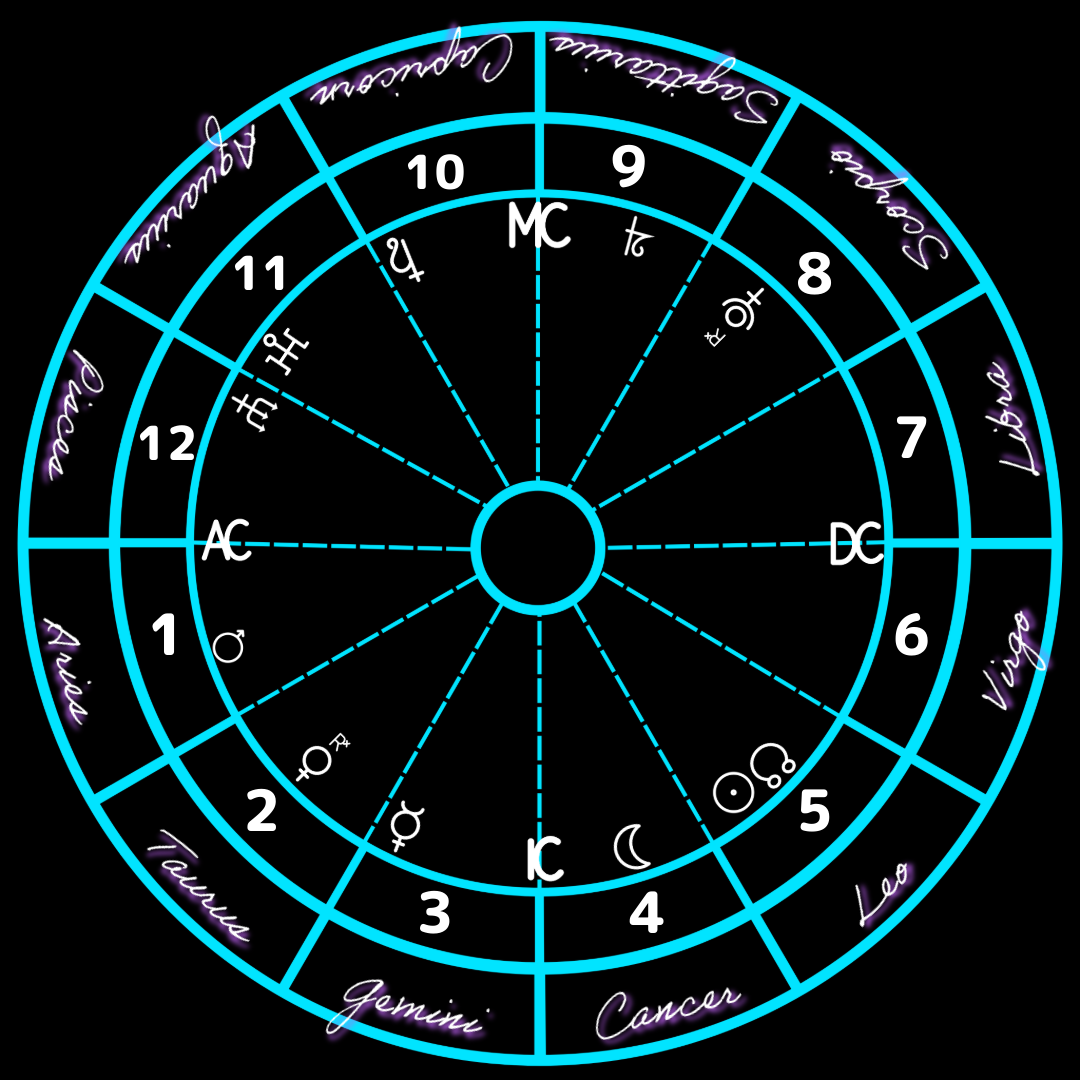
With all of that being said, let’s get to it! Now that we have a basic understanding of how the planets move, let’s focus on the image below. This is an important tool astrologers use called the astrological wheel.
Its significance is that it allows us to see the planetary movements and their relativity. Imagine you’re in a 2-dimensional space, looking at the solar system from above it. Essentially, this is the idea, which helps us to visualize planetary movement.
In this wheel, there are a few key components:
- 12 zodiac signs
- 12 houses
- 10 Planets
On the outer circle of the wheel are the zodiac signs. The next circle are the numbers of the houses. Lastly, the symbols within the triangular parts of the wheel are for the planets.
Planets
In astrology, we consider ten planets, which includes our sun, moon, and Pluto. Each planet represents a specific part of human nature, such as our personal identity or our ability to communicate. While some planets have greater importance to our astrology chart, we have a zodiac sign for each of them. Let’s look at the symbolic, astrological interpretation of the planets.
- Sun — Ego, Values, Energy, Vitality, Will, Conscious Mind
- Moon — Emotions, Intuition, Mood, Needs, Desires, Unconscious Mind
- Mercury — Communication, Movement, Intellect, Expression, Reason, Logical Mind
- Venus — Beauty, Art, Creation, Romance, Pleasure, Indulgence
- Mars — Aggression, Action, Attitude, Competition, Courage, Passion
- Jupiter — Luck, Expansion, Growth, Optimism, Abundance, Wisdom
- Saturn — Karma, Restriction, Limitation, Time, Discipline, Ambition
- Uranus — Eccentricity, Rebellion, Change, Discovery, Liberation, Individuality
- Neptune — Dreams, Mysticism, Imagination, Empathy, Psychic Ability, Sensitivity
- Pluto — Transformation, Loss, Renewal, Mystery, Sex, Power
The Zodiac Signs
There are a total of twelve zodiac signs. Each one has its own set of characteristics. While a few signs are more abrasive, others are more meek. Some are leaders, while the opposing signs prefer to follow. Lastly, the twelve signs have respective elements, qualities, symbols, planets, houses, and symbolism.
- Aries: Courageous, Impulsive, Determined, Impatient, Bold, Assertive
- Taurus: Reliable, Practical, Stubborn, Possessive, Grounded, Patient
- Gemini: Curious, Adaptable, Nervous, Indecisive, Energetic, Clever
- Cancer: Loyal, Sympathetic, Nurturing, Moody, Protective, Welcoming
- Leo: Passionate, Creative, Arrogant, Proud, Confident, Dramatic
- Virgo: Analytical, Critical, Generous, Anxious, Reserved, Perceptive
- Libra: Fair-minded, Social, Passive, Guarded, Just, Friendly
- Scorpio: Resourceful, Mysterious, Secretive, Manipulative, Intense, Passionate
- Sagittarius: Adventurous, Brash, Idealistic, Philosophical, Self-absorbed, Open-minded
- Capricorn: Disciplined, Self-Controlled, Composed, Melancholy, Ambitious, Focused
- Aquarius: Progressive, Independent, Aloof, Inventive, Eclectic, Distracted
- Pisces: Intuitive, Gentle, Fearful, Compassionate, Dreamy, Sensitive
The Astrological Houses
Each sign is ruled by a planet and each house is ruled by a sign, connecting the three. However, just like the signs and planets, houses also have their own qualities and quirks. The difference in planets, signs, and houses is that houses tell us more about our experiences than about our characteristics like the signs.
- First House: Appearance, the self, solo, representation, persona
- Second House: Money, possessions, daily life, material goods, spending habits
- Third House: Education, neighbors, siblings, communication, travel
- Fourth House: Home, family, childhood, comfort, foundation
- Fifth House: Play, fun, creativity, self-expression, children
- Sixth House: Health, pets, hygiene, well-being, cleanliness
- Seventh House: Relationships, partnerships, marriage, contracts, adversaries
- Eighth House: Deaths, inheritances, losses, sexual preferences, secrets
- Ninth House: Philosophies, cultures, explorations, adventures, wisdom
- Tenth House: Career, status, reputation, titles, public
- Eleventh House: Groups, friends, colleagues, organizations, associations
- Twelfth House: Self-undoing, jail, hospitals, hidden enemies, isolation


Leave a Reply
You must be logged in to post a comment.